Cabinet from Bergamo 16th-Century
- Meta Title: 16th-Century Bergamasque Two-Body Cabinet | Gilded & Polychrome Stipo
- Meta Description: Rare 16th-century two-body cabinet (stipo) from the Bergamo region. Features deep-carved water gilding, polychrome sculptural heads, and tempera-painted interiors.
- Primary Keywords: 16th-century two-body cabinet, Renaissance woodwork Bergamo, North Italian Renaissance furniture, water-gilded stipo, polychrome wooden sculptures, high-period Italian furniture, Mannerist grotesque carving.
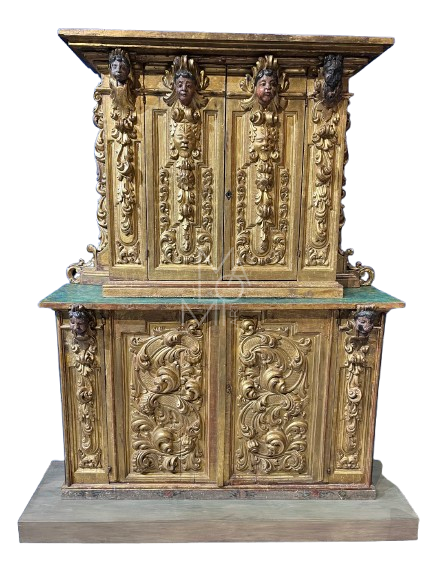
- Object Type: Small Canonical Cabinet / Two-Body Display Stipo (Stipo a doppio corpo)
- Date: 16th Century (High Renaissance / Mannerism)
- Cultural Sphere: Master Woodworking Workshops of the Bergamo Region (Lombard-Venetian Borderland)
- Materials and Techniques: Carved walnut and poplar core; water-gilding with pure gold leaf over red bole; egg/glue tempera painting; coeval wrought-iron hardware.
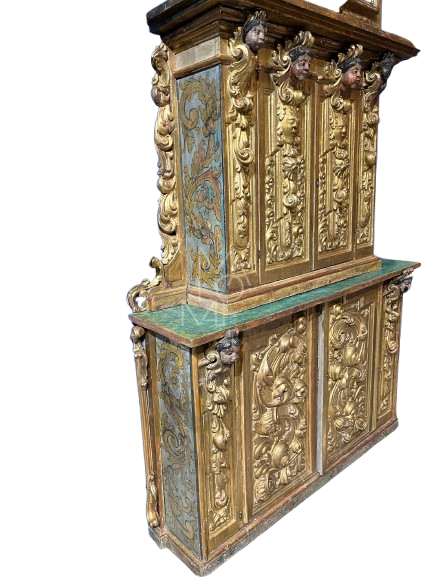
- Configuration: Receded two-body vertical structure (upper section set back from the base).
- Compartments: 4 hinged doors (2 in the lower base section, 2 in the upper section).
- Structural Elements: Intermediate shelf highlighted with a green lacquered finish; protruding cornices and anthropomorphic pilasters.
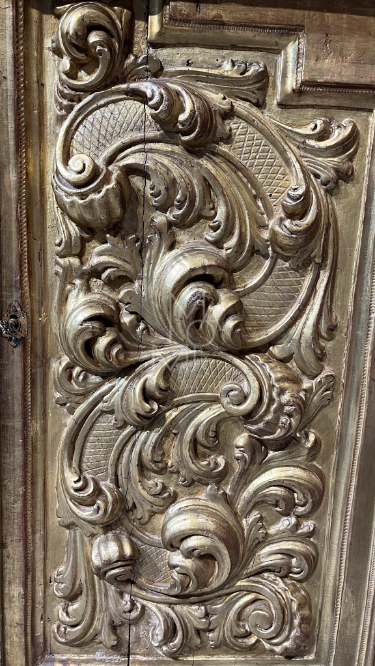
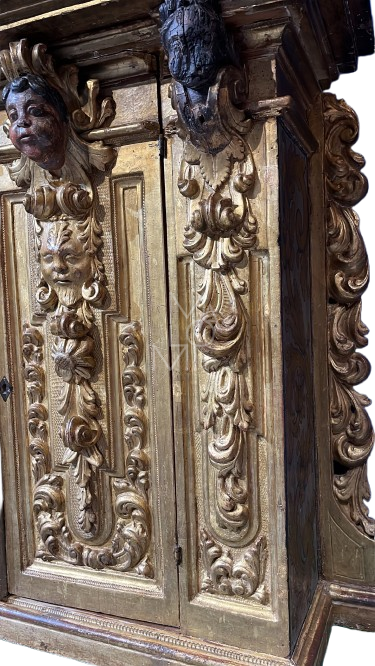
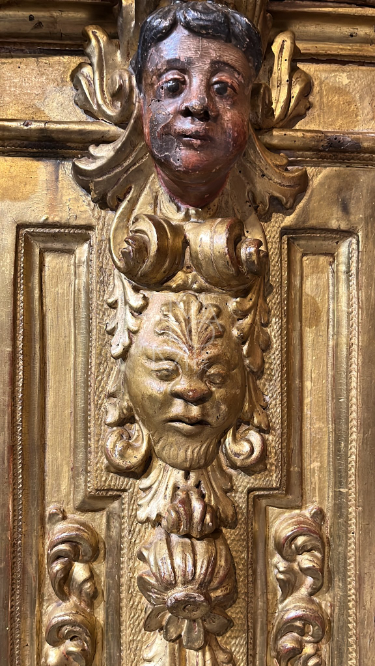
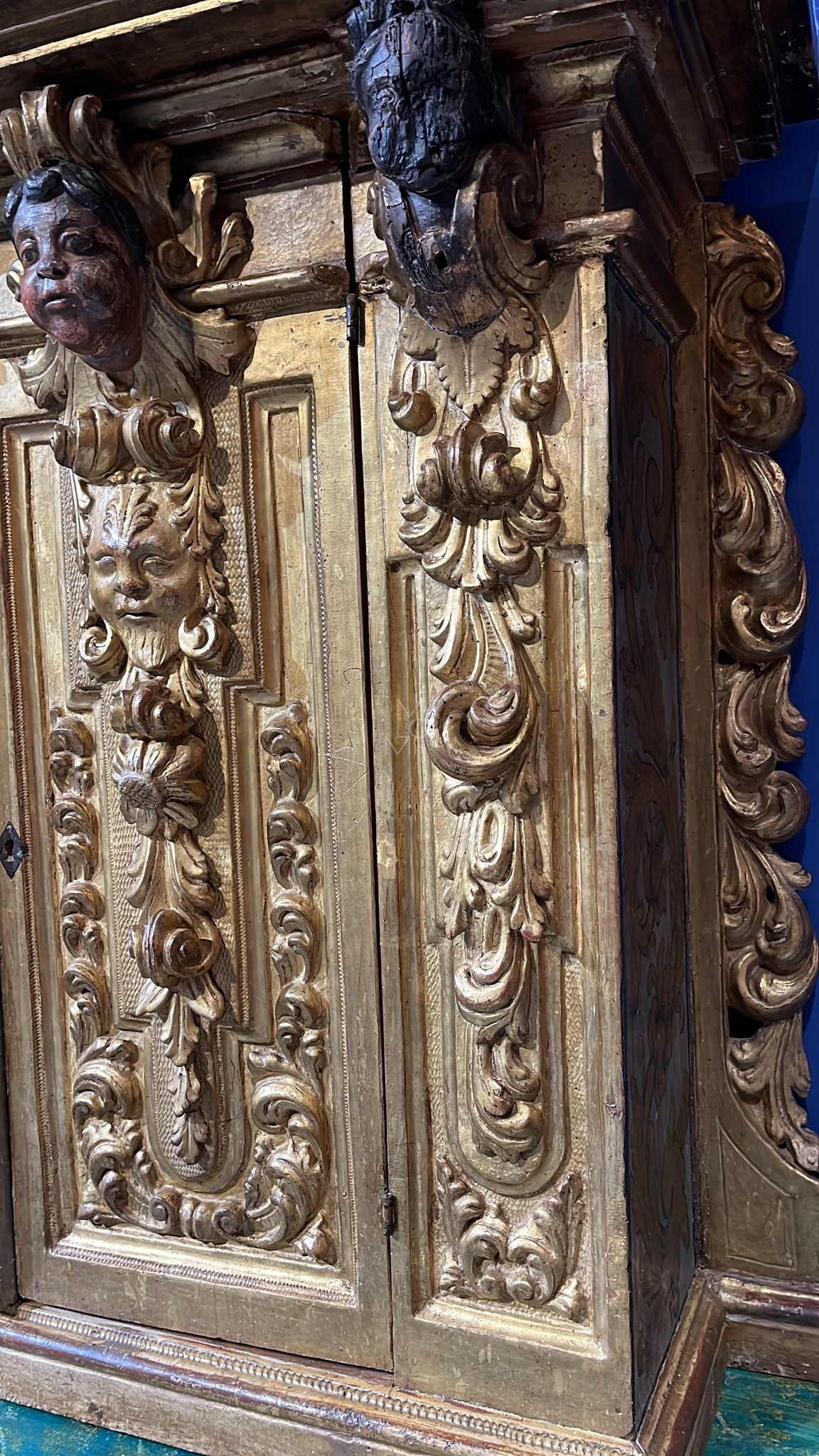
- Lower Register (The Base): Corner pillars adorned with Mannerist grotesque mascarons; deeply carved fleshy volutes and scrolled cartouches; uniform gilding with pronounced chiaroscuro.
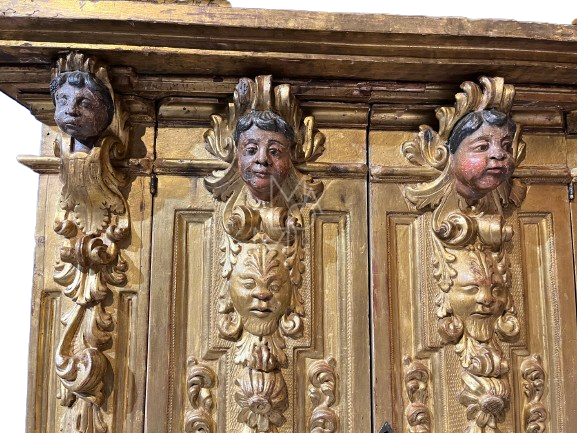
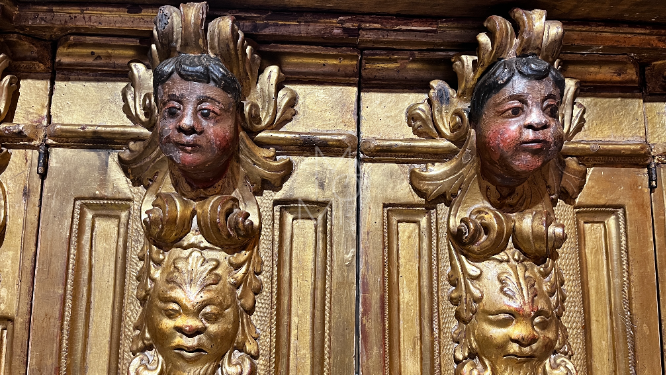
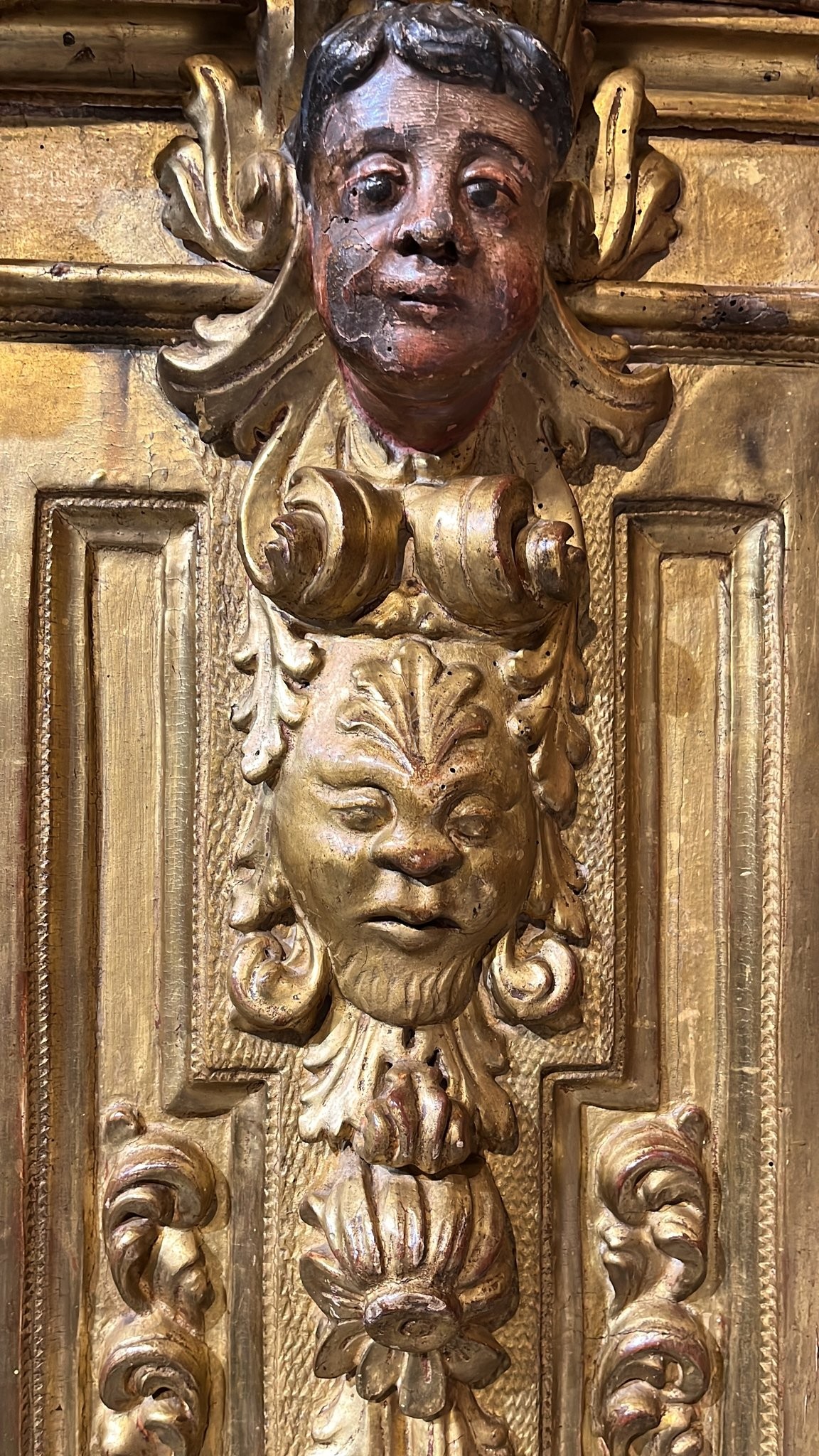
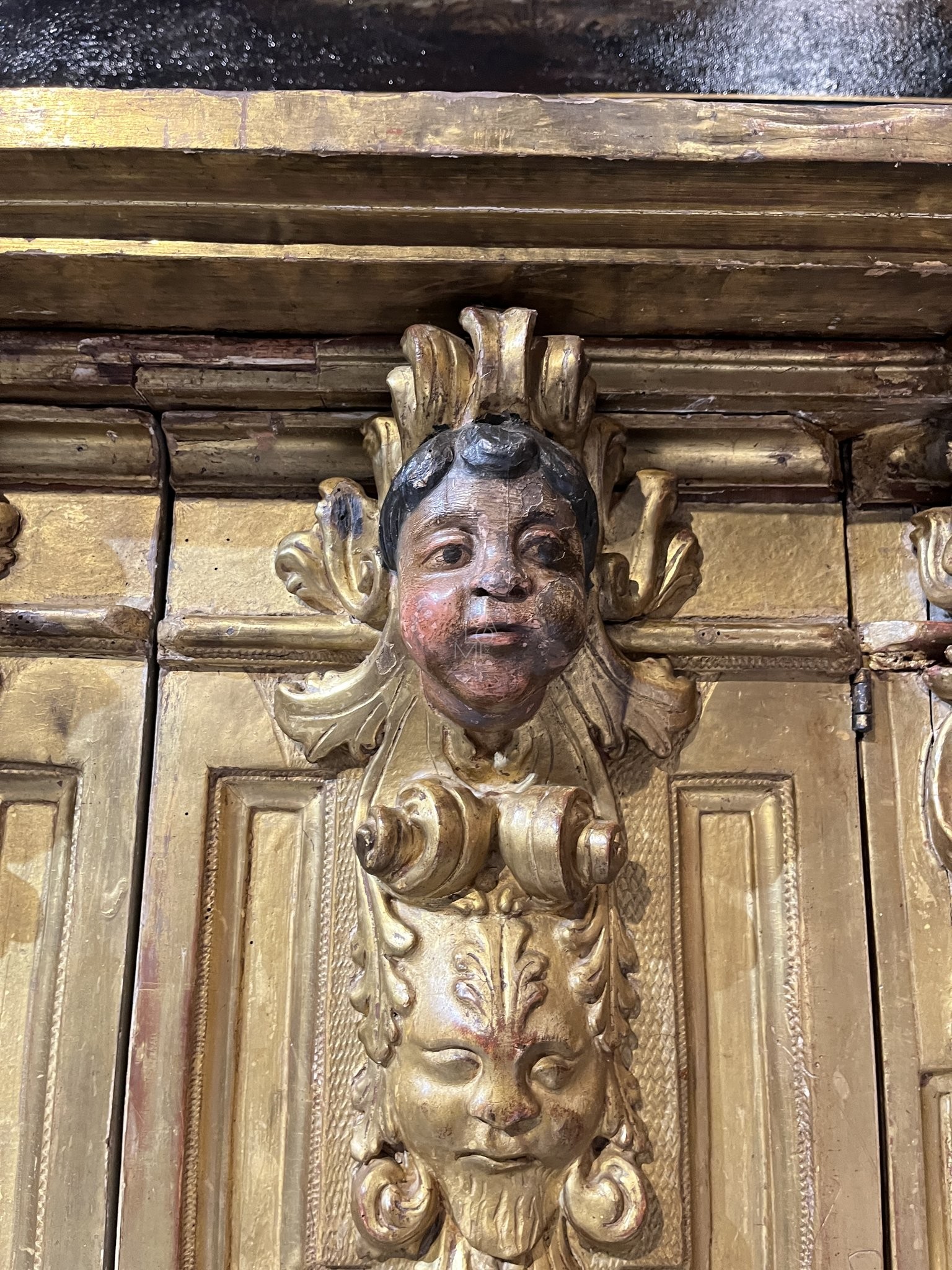
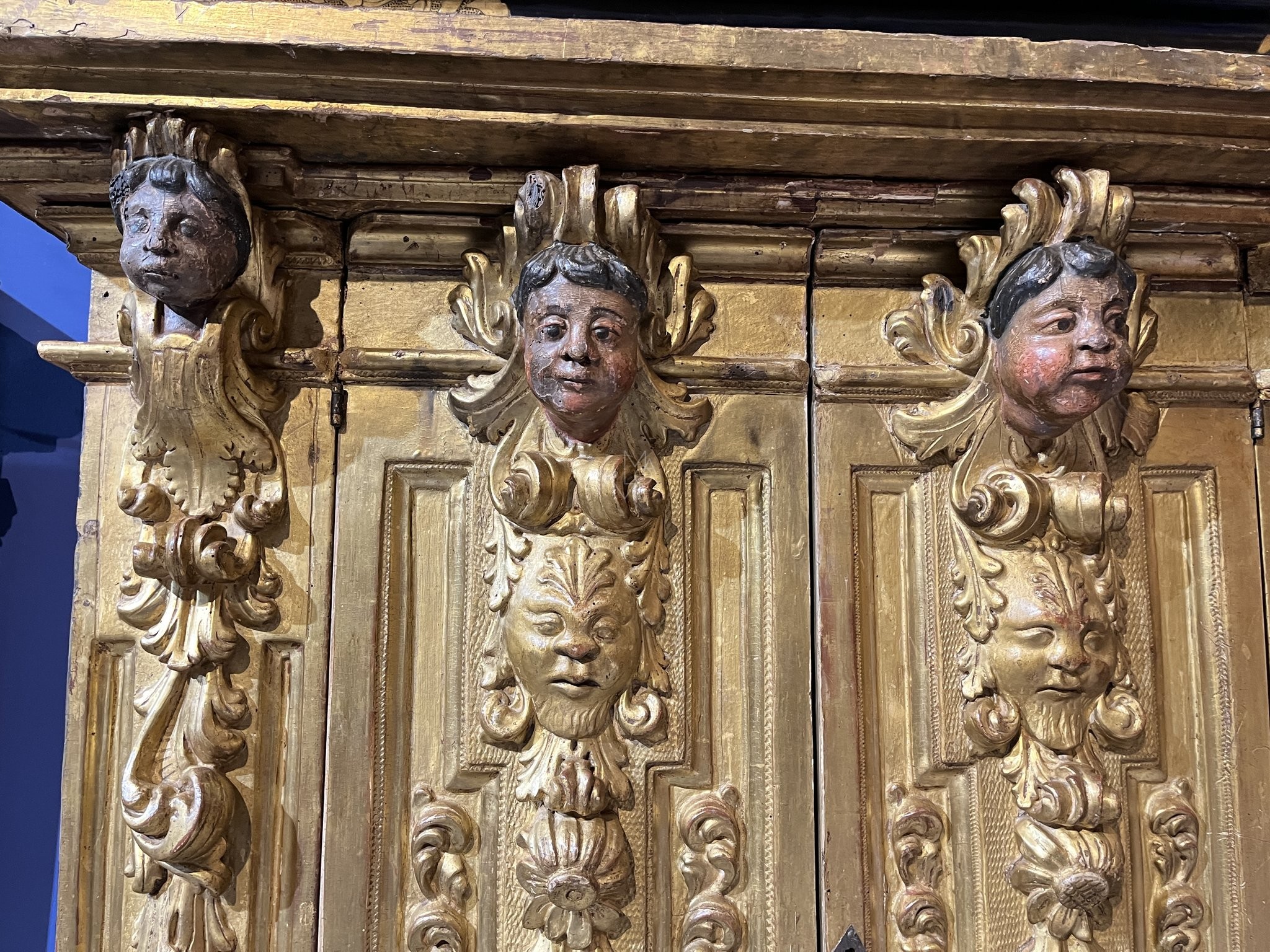
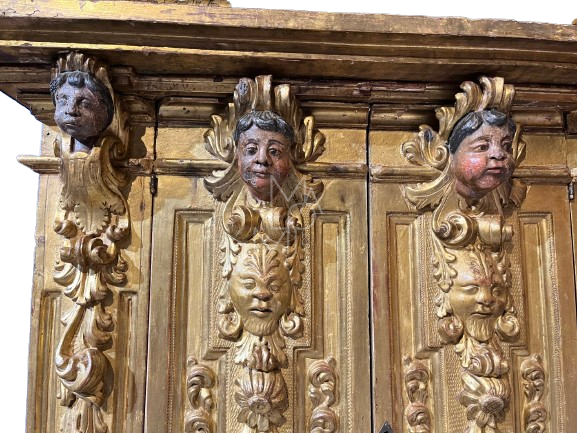
- Upper Register (The Frieze): A tripartite architectural frieze featuring three sculpted heads rendered with naturalistic polychromy (lifelike skin tones) and gilded accents.
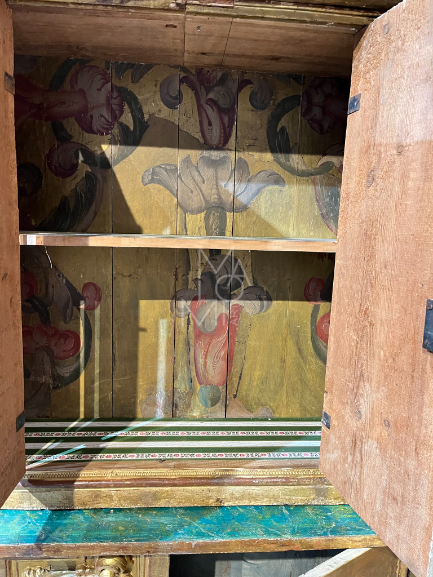
- Upper Interior Compartment: Executed according to the standards of panel painting, displaying a refined candelabra and grotesque motif in tempera over pure gold leaf.
- Lower Interior Compartment: A bolder decorative schema featuring large stylized floral corollas (sunflower and daisy motifs) in red and slate-blue tempera; shelf edges demarcated by polychrome geometric striping.
- Hardware: Retains its original 16th-century wrought-iron lockplates, latches, and ring-pulls, characteristic of the Alpine iron-forging valleys of Bergamo.
- Conservation Status: Exceptional state of preservation, particularly regarding the stability of the interior tempera pigments and the integrity of the external water-gilding layer.
The Scenographic Renaissance in Woodwork: Structure, Iconography, and Painted Interiors in a 16th-Century Two-Body Cabinet from Bergamo
- Introduction and Historical-Artistic Framework
During the 16th century, the territory of Bergamo experienced an extraordinary artistic flourish shaped by its unique geopolitical position. Situated under the dominion of the Republic of Venice as a borderland of the Stato da Terra (Mainland Dominions), the Bergamo region absorbed the figurative culture of the Venetian lagoon. It seamlessly fused this influence with the plastic and structural rigor typical of the Lombard tradition.
In this vibrant cultural climate, the production of luxury wooden furniture was not merely utilitarian; it served as a powerful vehicle for social prestige and doctrinal expression. The artifact under examination—a small canonical stipo, or two-body cabinet—fits perfectly into this production of high-end cabinetmaking. Such pieces were commissioned for the sacristies of prestigious parish churches or the private studioli of the local aristocracy.
- The Architectural Structure of the "Two-Body" Cabinet
The morphology of the furniture is defined by its receded two-body configuration, a monumental architectural solution that gained prominence during the High Renaissance.
- The Lower Section: Functions as a solid architectural base. Characterized by wider proportions, it houses two large doors framed by protruding moldings, designed to visually anchor the piece to the ground.
- The Upper Section: Slightly set back from the base, it echoes the geometric layout below but lightens the overall volume. It features two hinged doors secured by period wrought-iron locks.
- The Reduced Scale ("Small"): The designation "small" indicates a highly specialized function. This is not a common, monumental sacristy wardrobe, but rather a display cabinet designed to safeguard precious objects: holy relics, silver chalices, missals, or confidential parish archives.
Separating the two sections is an intermediate shelf finished in a green hue. This element breaks the monotony of the wood tones and visually punctuates the multi-tiered architecture of the piece.
- The External Decorative Program: Carving, Gilding, and Mascarons
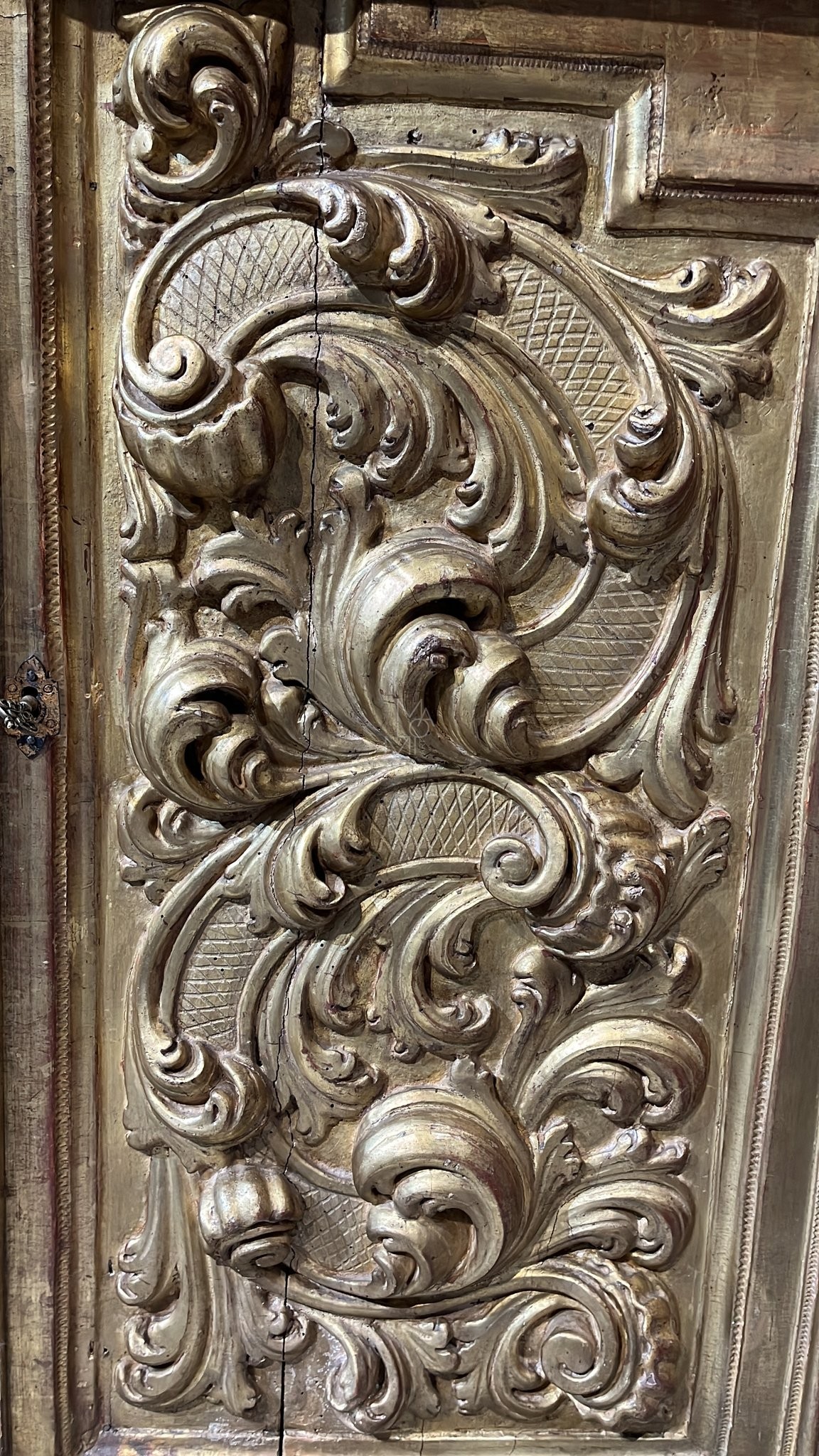
The uniqueness of this cabinet lies in its extremely rich external ornamentation. The walnut surfaces are deeply carved in high relief with fleshy volutes and scrolled cartouches, all entirely covered in gold leaf. The sculptural elements are governed by a strict, ascending iconographic hierarchy:
- The Lower Mascarons (The Chthonic World): Positioned on the corner pillars of the base, these faces belong to the Mannerist grotesque tradition. They feature pronounced traits, furrowed brows, and severe expressions that blend human and botanical elements. They serve an apotropaic function, symbolizing the primal forces of the earth and untamed matter. The deep carving and uniform gilding heighten their dramatic chiaroscuro.
- The Upper Heads (The Human and Spiritual Dimension): Applied as a frieze directly beneath the upper cornice, three small heads break the monochrome gold expanse through naturalistic polychromy. Their realistic skin tones, pigmented lips, and frontal gazes elevate these figures toward the sacred sphere (such as cherubs or members of the Trinity) or humanistic allegories (such as philosophers or the ages of man).
- The Play of Light and Interior Scenography
In the 16th century, indoor lighting relied entirely on natural daylight or the artificial, flickering flames of candles and oil lamps. In such environments, this gilded cabinet functioned as a literal device for light amplification.
The pure gold leaf, applied via the water-gilding technique over a red bole base, did not absorb light but multiplied it. The unstable, dancing nature of candlelight imparted motion to the gilded surface; the gold appeared to vibrate. Furthermore, the alternation between mirror-burnished areas and matte or punched (granitura) textures mimicked the rich weave of precious brocade fabrics. The deep shadows cast by the undercut carvings lent the cabinet a theatrical, three-dimensional presence. Amidst this shimmering reflection, the three upper polychrome heads absorbed light differently, emerging as magnetic focal points that simulated a "real presence" (effetto presenza) within the dimness of the room.
- The Aesthetics of the Casket: Gilded and Tempera-Painted Interiors
The true scholarly revelation of this artifact lies within its internal compartments. Far from being raw or merely lined, the interiors are treated according to the stringent standards of Renaissance panel painting. This reveals a refined "aesthetics of wonder" (estetica della meraviglia) meant to astonish the viewer the moment the doors were opened.
The interior wooden walls were prepared with traditional layers of gesso and animal glue (imprimitura) to receive a decoration that combines the opulence of gold with the precision of natural organic pigments:
- The Upper Compartment: Conceived as a miniature scholar's study. The back panel features an elegant candelabra and grotesque motif painted in tempera over a background of pure gold leaf. When the doors were opened, this gilded backdrop reflected the ambient light, enveloping the sacred vessels or relics in a mystical glow.
- The Lower Compartment: Displays a bolder, more material decoration suited for a base section. It is dominated by large stylized floral corollas (daisy or sunflower motifs) painted in tempera with shades of red and slate blue. The edges of the intermediate shelves are patterned with polychrome geometric stripes (white, red, and green), serving as an elegant visual guide.
The coeval hardware—notably the prominent wrought-iron lock on the upper door—confirms the high quality of metallurgical craftsmanship in the Bergamo valleys, which were historically renowned for iron forging.
- Conclusion
This small, two-body canonical cabinet represents a rare apex of Lombard-Venetian Renaissance woodwork. Its historical-artistic value resides in the seamless synthesis between the mastery of the carver and that of the painter-gilder. Through a coherent dialogue between external architectural rigor, hierarchical sculptural heads, and the intimate luxury of tempera on gold leaf within, this piece transcends its furniture status. It transforms into a piece of monumental, kinetic architecture—a faithful mirror of the highly cultured patronage and refined workshops of 16th-century Bergamo.