Early Eighteenth-Century Single-Board Poplar Console Table
Baroque Furniture in the Brescian Area: A Historico-Artistic and Socio-Economic Analysis of an Early Eighteenth-Century Single-Board Poplar Console Table
Introduction and historico-geographic framework
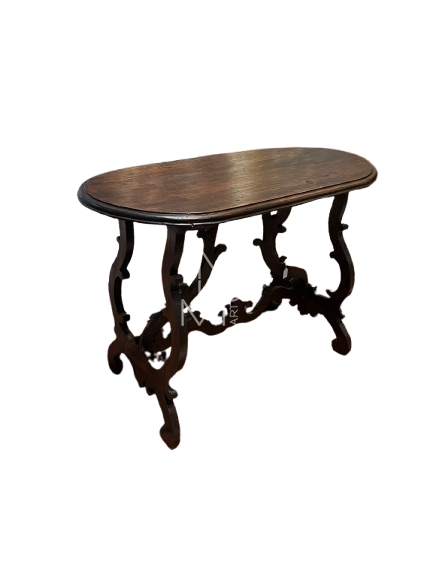
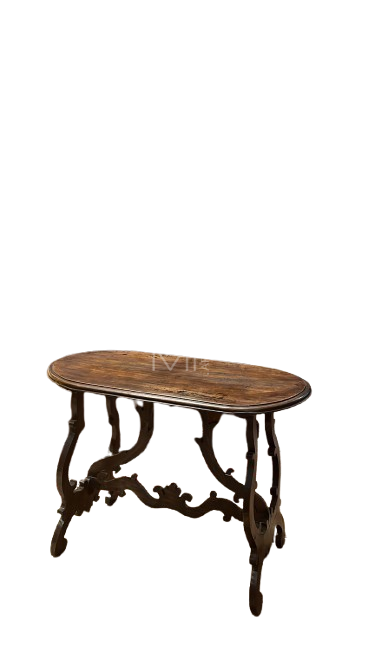
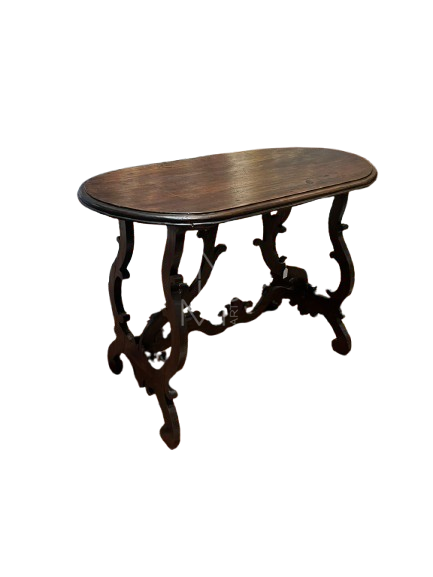
Within the broader historiography of Italian furniture design, cabinetmaking from the Lombard region—and specifically from the district of Brescia—occupies a position of critical distinctiveness. During the first half of the eighteenth century, the Brescian territory maintained a robust plastic and structural identity, despite its political integration into the Domini di Terraferma (mainland domains) of the Most Serene Republic of Venice. While Venice increasingly gravitated toward the ephemeral splendors of the Rococo, embracing polychrome painted decorations and delicate lacquered finishes, Brescian workshops remained steadfastly anchored to a more rigorous, structural conception of wood. The object under examination—a single-board elliptical table measuring 100x50 cm—perfectly embodies this transitional phase. It captures a precise moment when the severe, late-Baroque volumes of the seventeenth century welcomed nascent early-eighteenth-century dynamic impulses, translating them into the solidity and permanence of solid timber.
Technical analysis and morphology of the single-board top
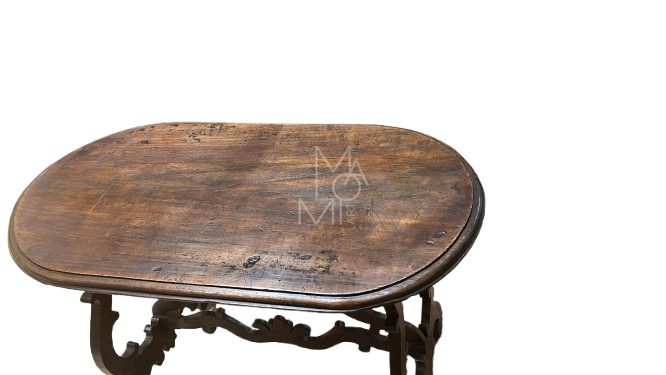
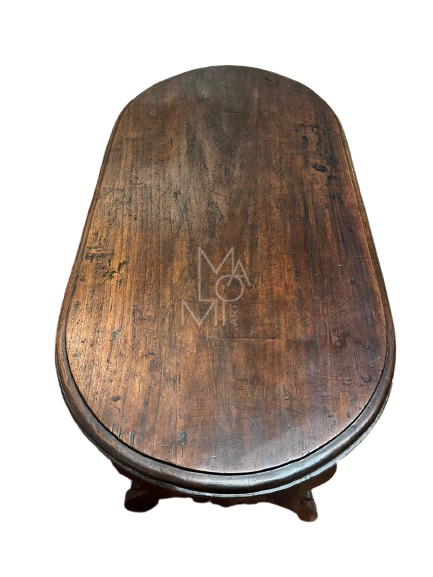
The primary philological merit of this piece lies in the configuration of its tabletop. The deliberate design choice to employ a single board hewn directly from solid timber indicates a highly sophisticated patronage and the availability of premium-quality timber possessing a generous grain width.
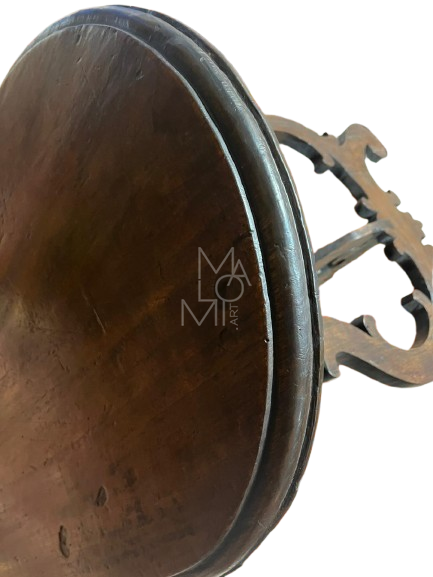
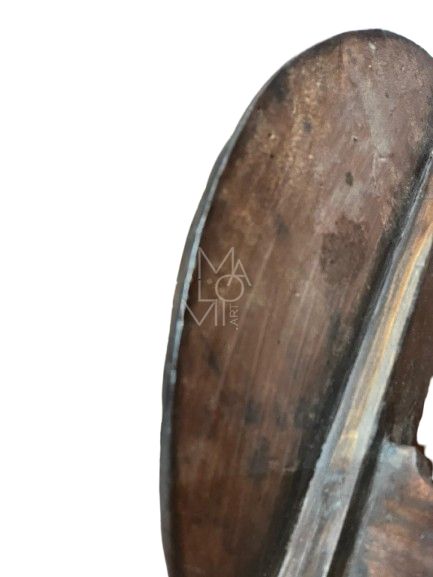
The elliptical form—representing a geometric and spatial departure from the rigid rectangular conventions of the Baroque—is further enriched by a sophisticated perimeter shaping. The execution of the edge moulding follows a distinct bevel (a bisello): an oblique cut that tapers the thickness of the board, generating a subtle interplay of light and shadow that visually lightens the top without compromising its structural integrity. This specific finish underscores the master cabinetmaker’s virtuosity in working across the wood grain, flawlessly navigating the curved perimeter without causing fracturing or splintering.
The use of white poplar in padan cabinetmaking: material idiosyncrasies
From a strictly xylological perspective, identifying the timber as white poplar (Populus alba, historically referred to in Northern Italy as gattice) provides a fundamental interpretative marker for the correct exegesis of this piece. Though traditionally associated with "minor" or vernacular provincial furniture production, this specific timber assumes a genuine critical dignity within the early-eighteenth-century Brescian and Padan milieu. White poplar, characterized by a pale sapwood and a heartwood that matures into warm, amber hues, proves exceptionally well-suited for direct carving due to its relatively soft fibrous structure, provided it has been seasoned to perfection to prevent warping.
In the case of this single-board elliptical top, the selection of white poplar yields a visually cohesive surface, yet one subtly animated by delicate, silken grain patterns. The subsequent historical patination—frequently enhanced by washes derived from natural earths or walnut husk stain (mallo di noce)—amplifies its intrinsic sheen. This treatment bestows a warm chromatic depth upon the table, effectively emulating more aristocratic hardwoods while preserving a distinct, vibrant material identity tied to its native landscape.
The supporting structure: the concept of "fratina" tressel legs
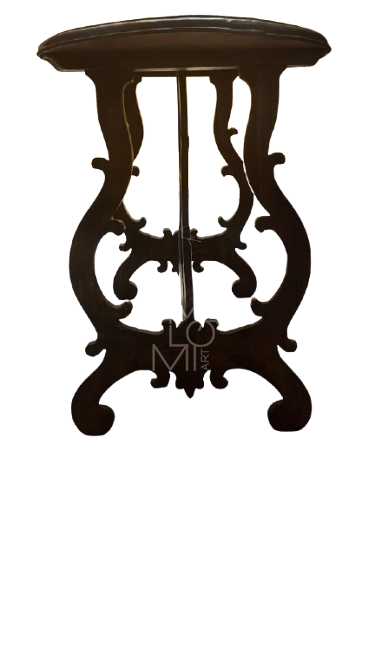
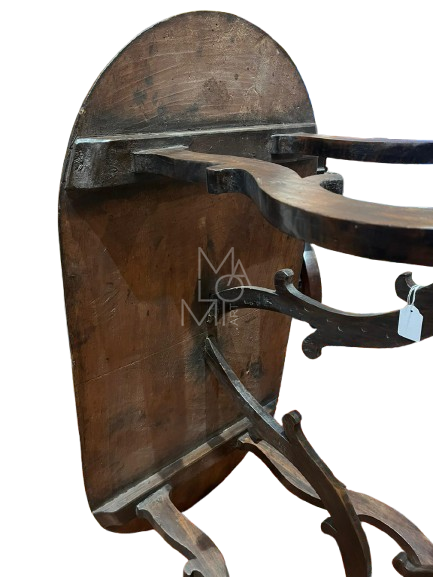
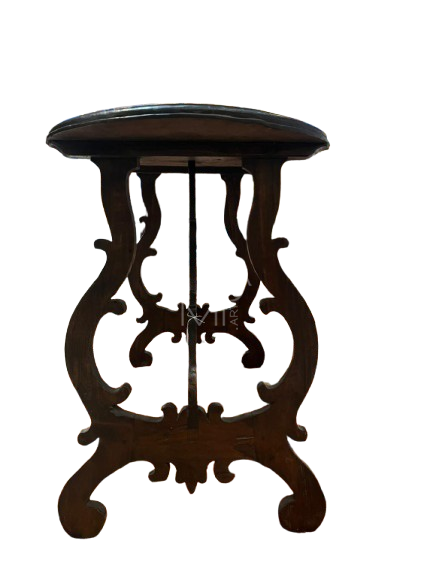
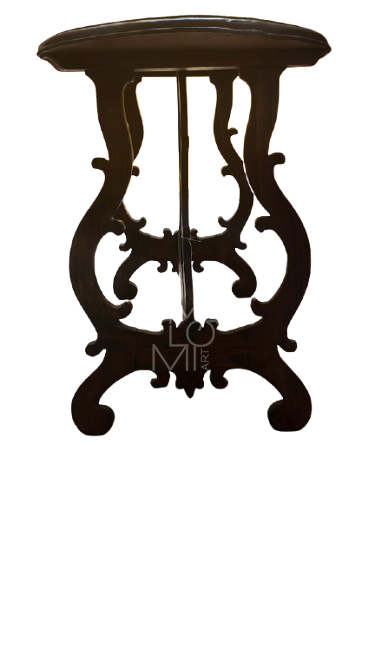
The base of the table innovates upon the classical model of the monastic refectory table, known as the tavolo fratino—originally monumental furnishings born within monastic institutions and later adopted by the aristocracy of the Po Valley. When scaled down to the proportions of a center or parlor table, these tressel legs (gambe fratinate) shed their austere rectilinear stiffness in favor of a deeply shaped, curvilinear profile.
The vertical standards are bound together by a scrolled and carved central stretcher, likewise sculpted entirely from solid timber, which serves simultaneously as a structural tie-beam and a decorative focal point. The sinuosity of the legs evokes a lyre-shaped silhouette or a system of opposed double volutes. This stylistic topos ensures maximum geometric stability while projecting an elegant dynamic tension into the surrounding domestic space.
Comparative analysis with coeval models of the lombard tradition
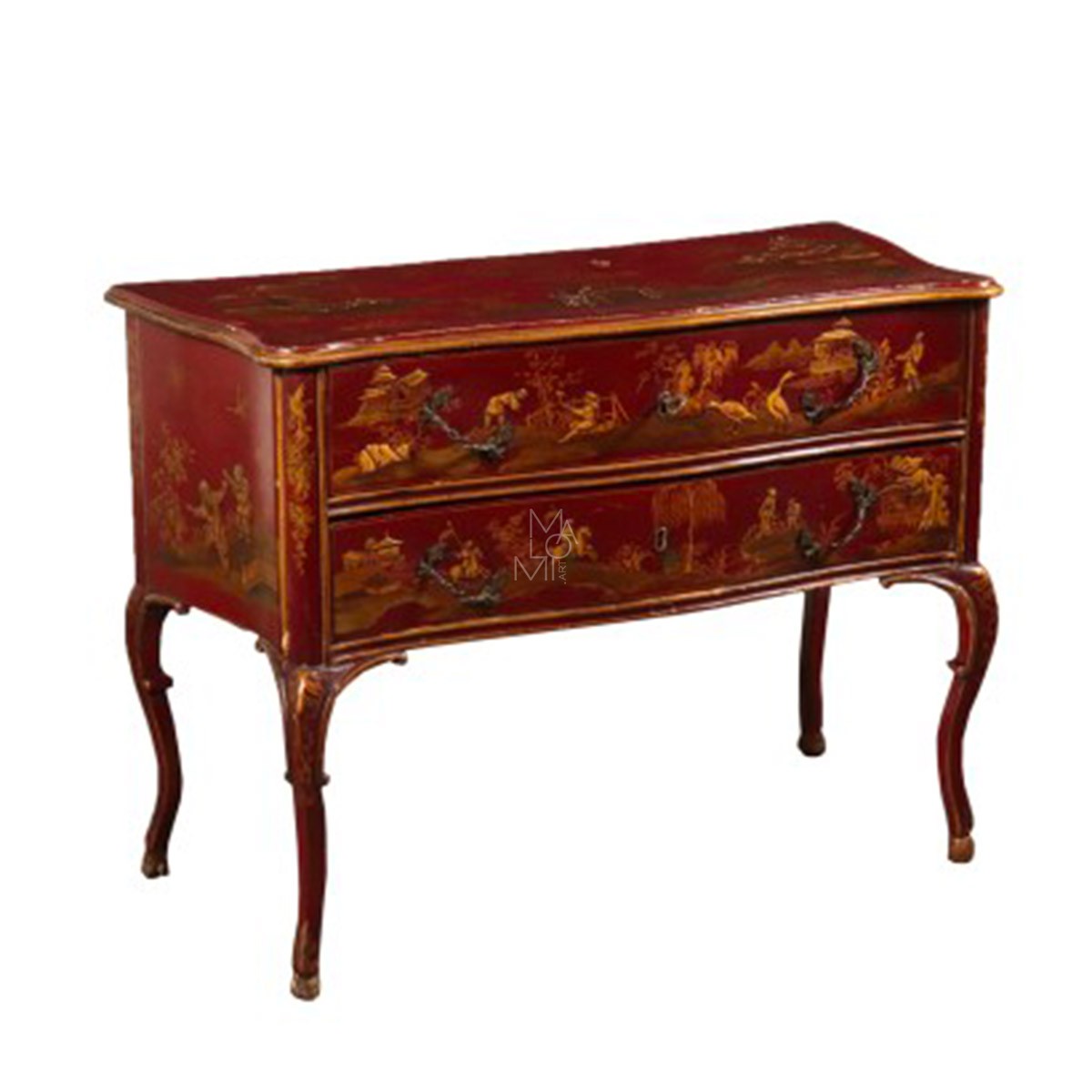
A philological comparison with coeval furniture production from Lombardy and the Venetian mainland isolates the unique qualities of this specimen within its contemporary design landscape. While international trends during the first half of the eighteenth century consecrated the transition toward Anglo-Dutch influenced cabriole-leg gaming tables, or the gilded opulence of Genoese and Roman Barocchetto, the Brescian area responded with a proud typological resistance, manifested in the retention of the fratino foot.
Morphologically comparable models showcasing a similar plastic attitude can be found in the historic inventories of Brescian patrician estates—such as the center tables documented in the collections of Palazzo Martinengo, or within historical private collections across Lake Iseo and the Franciacorta region. In these examples, the persistence of the lyre structure or the twisted volute coexists with the introduction of elliptical or serpentine tops. However, while coeval Milanese workshops were already moving toward a standardization of forms through the widespread application of veneered walnut burr, this table distinguishes itself through a sculptural, reductive approach directly on solid timber. This technique aligns it with earlier, high-era cabinetry traditions, qualifying the piece as a sophisticated and highly original compromise between the necessity of stylistic updates and fidelity to strict local structural conventions.
The socio-economic context: workshops, guilds, and patronage
The stylistic and formal evolution crystallized in this table cannot be fully understood without a rigorous examination of the socio-economic dynamics governing artistic production in the Brescian district during the early Settecento. Although the city of Brescia enjoyed relative stability under Venetian rule, its artisanal fabric maintained a fierce autonomy from the mandates of the lagoon capital. The local guild of Legnamari e Marangoni (Carpenters and Woodworkers) enforced a strict matriculation system. This system safeguhed manufacturing quality through rigorous oversight of construction techniques and material provenance.
The utilization of indigenous timbers such as white poplar—abundantly available along the river basins of the Po Valley—aligned not only with geographical proximity and the mitigation of transport costs (which were frequently subject to internal customs tolls), but also with a targeted market strategy adopted by local workshops. To compete with the expensive walnut-veneered or exotic-hardwood furnishings arriving from larger urban centers, Brescian cabinetmakers noble-ized local timbers. They achieved this through superlative skill in direct carving and highly sophisticated finishing techniques.
From the perspective of patronage, a piece of furniture of this typology chronicles the emergence of a new domestic sensibility among the provincial nobility and the wealthy agrarian and mercantile bourgeoisie of Franciacorta and the Brescian valleys. Distant from the monumental scales and representative theatricality of major European courts, this class of patrons demanded furnishings that balanced updated Barocchetto decorum with distinct domestic utility. The compact dimensions (100x50 cm) and the elliptical geometry of the top directly address the spatial reconfiguration of eighteenth-century interiors. These rooms were no longer conceived as static, monumental galleries, but as intimate, flexible spaces dedicated to conversation, parlor games, and daily social interaction.
Conclusions
In final analysis, this Brescian table represents an exquisite specimen of regional Italian high cabinetmaking. The choice of a native raw material like white poplar, the strict preservation of the top as a single seamless board, the quality of its patination, and the impeccable structural coherence between the beveled top and the fratina base all elevate this piece into an important historical document. The work serves as an ideal economic and cultural crossroads. It bridges the aristocratic sobriety of Brescia—historically resistant to the ephemeral luxuries of Venetian fashion—with the technical wisdom of an artisanal class capable of imparting permanent aesthetic value into the raw materials of their own soil, beautifully illustrating the delicate transition from the exuberance of the Baroque to the refinement of the Lombard Settecento.