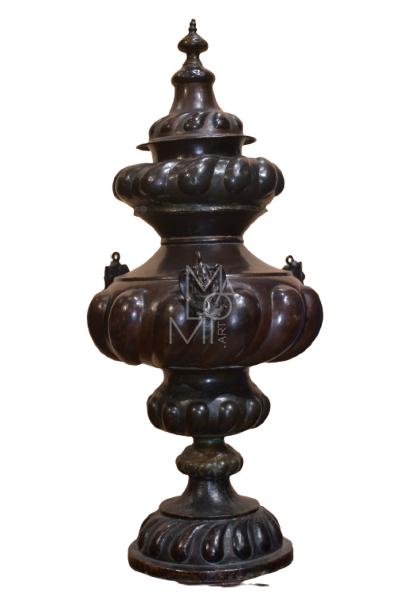
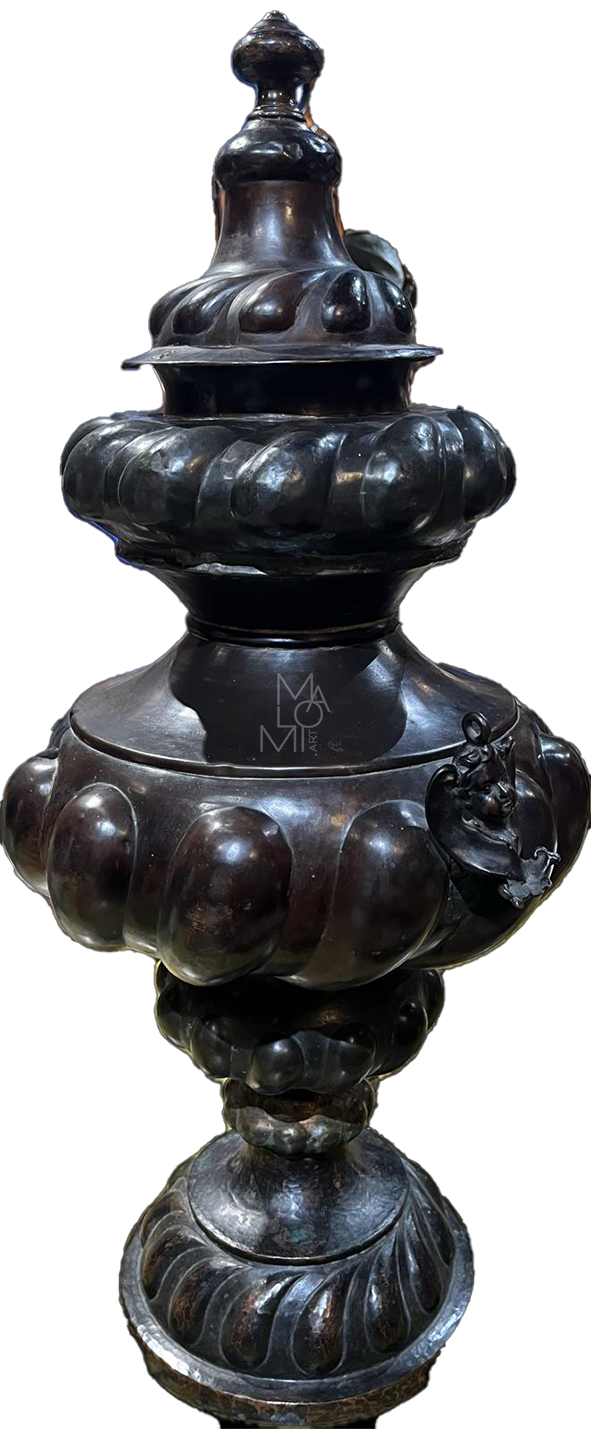
Tuscan thurible 17th century
In-depth historical-artistic analysis
Introduction
The 17th century Florentine thurible represents an emblematic example of Baroque sacred art, combining liturgical functionality, symbolic value and refined craftsmanship. This analysis aims to delve into the stylistic, technical and symbolic characteristics of the object, placing it in the historical, artistic and cultural context of the time.
Description of the Object
The object is a chiseled copper thurible, typical of 17th century Florentine goldsmithing. Its hemispherical ribbed structure, combined with the lid which could be lifted using chains, allows the diffusion of sacred smoke during liturgical ceremonies. The handles, finely decorated with zoomorphic and mythological motifs, reflect the influence of baroque iconography, which integrates religious and symbolic elements with a strong expressive charge.
Measurements in centimeters 85 x 43 diameter
Historical and Artistic Context
In the 17th century, Florence confirmed itself as a nerve center for art and culture, characterized by an artistic production of great emotional intensity and symbolic complexity typical of the Baroque. The thurible, in addition to its practical function in the liturgy, took on an emblematic role in spiritual purification, representing a bridge between the sacred and the profane.
Technique and Materials
The processing of chiseled copper testifies to the skill of Florentine artisans, capable of creating decorated surfaces with precision and richness of detail. The chiseling techniques were the result of a consolidated tradition, which reflected the artisanal excellence of the time.
Symbolic Meaning
The zoomorphic and mythological motifs present on the handles are not mere decorative elements, but convey profound meanings linked to Baroque beliefs and values. The integration of religious and allegorical symbols creates a layered visual language, which highlights the cultural and spiritual complexity of the period.
State of Conservation
The object is in excellent condition, with the original patina well preserved and the chiseled details still clear. This aspect enhances its authenticity and historical value, allowing a direct reading of the techniques and styles of the time.
Conclusions
The 17th century Florentine thurible is a precious witness to Baroque artistic and religious culture. His in-depth analysis contributes to a better understanding of the artistic, technical and symbolic dynamics of an era that profoundly marked the history of European art.
________________________________________
Bibliography and Sources
• Studies on Florentine baroque goldsmithery
• Iconographic analyzes of 17th century liturgical objects
• Historical documents relating to the liturgy and sacred art in Florence