Terracotta bust of Cosimo II dei Medici
Academic appraisal of the monumental terracotta bust of Cosimo II de' Medici by Manifattura di Signa (Model No. 524). Detailed technical datasheet and historical context of the fine Italian Renaissance revival sculpture.
The Terracotta Bust of Cosimo II de' Medici by the Manifattura di Signa: A Historico-Artistic and Documental Analysis of Exemplar No. 524
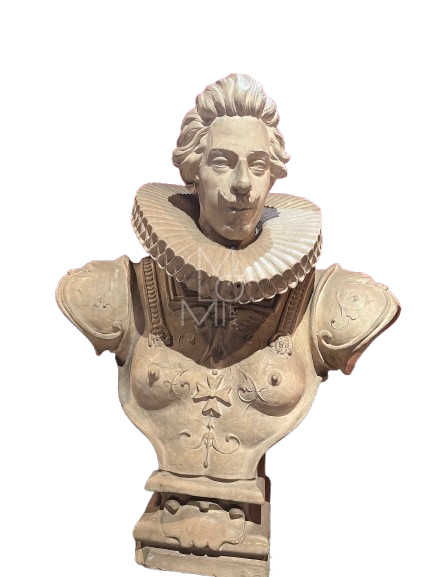
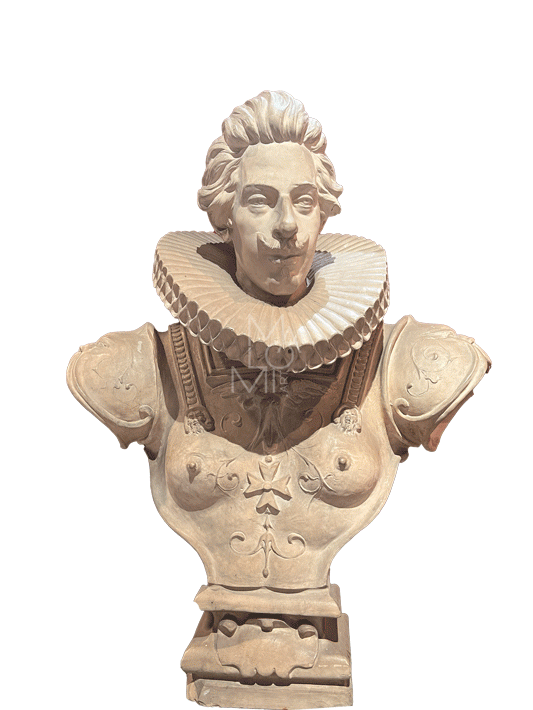
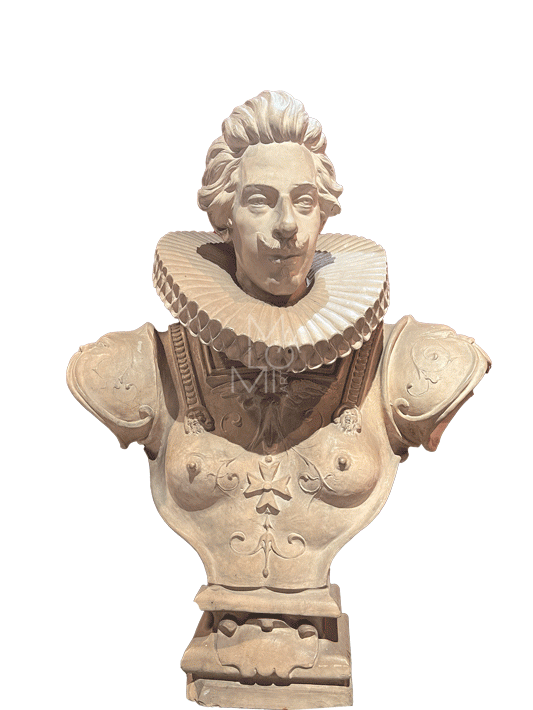
This monumental plastic artifact, measuring 70 x 25 x 90 (h) cm, represents an outstanding and philologically faithful sculptural derivation in terracotta based on the official iconography of Cosimo II de' Medici (1590–1621), Grand Duke of Tuscany [I1, I2]. An autoptic analysis of the reverse of the torso has definitively resolved the genesis of the work: it is a historically significant and highly sought-after collector's piece produced by the renowned Manifattura di Signa, datable between the late 19th century and the first decades of the 20th century—the period of peak artistic expression for the Florentine workshop under the direction of Camillo Bondi [I1, I2]. The sculpture is officially recorded as No. 524 within the historical catalog of the factory [I1, I2].
Iconographic context and dynastic effigy
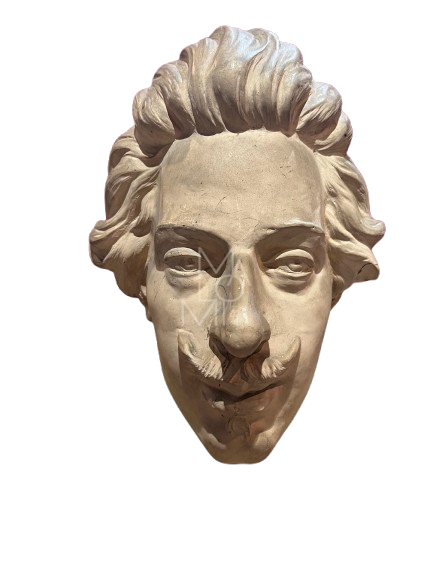
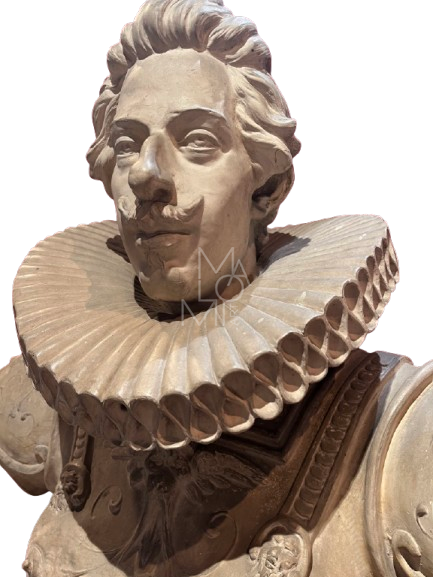
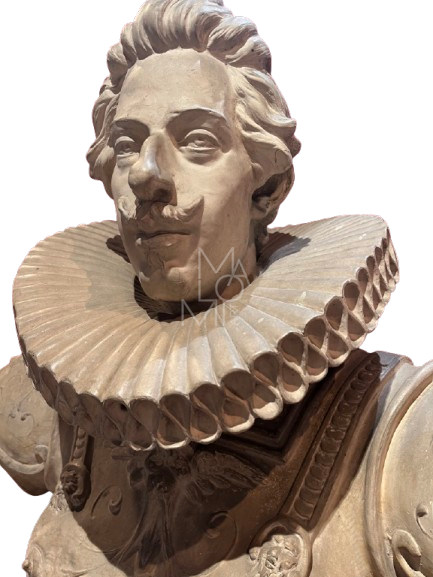
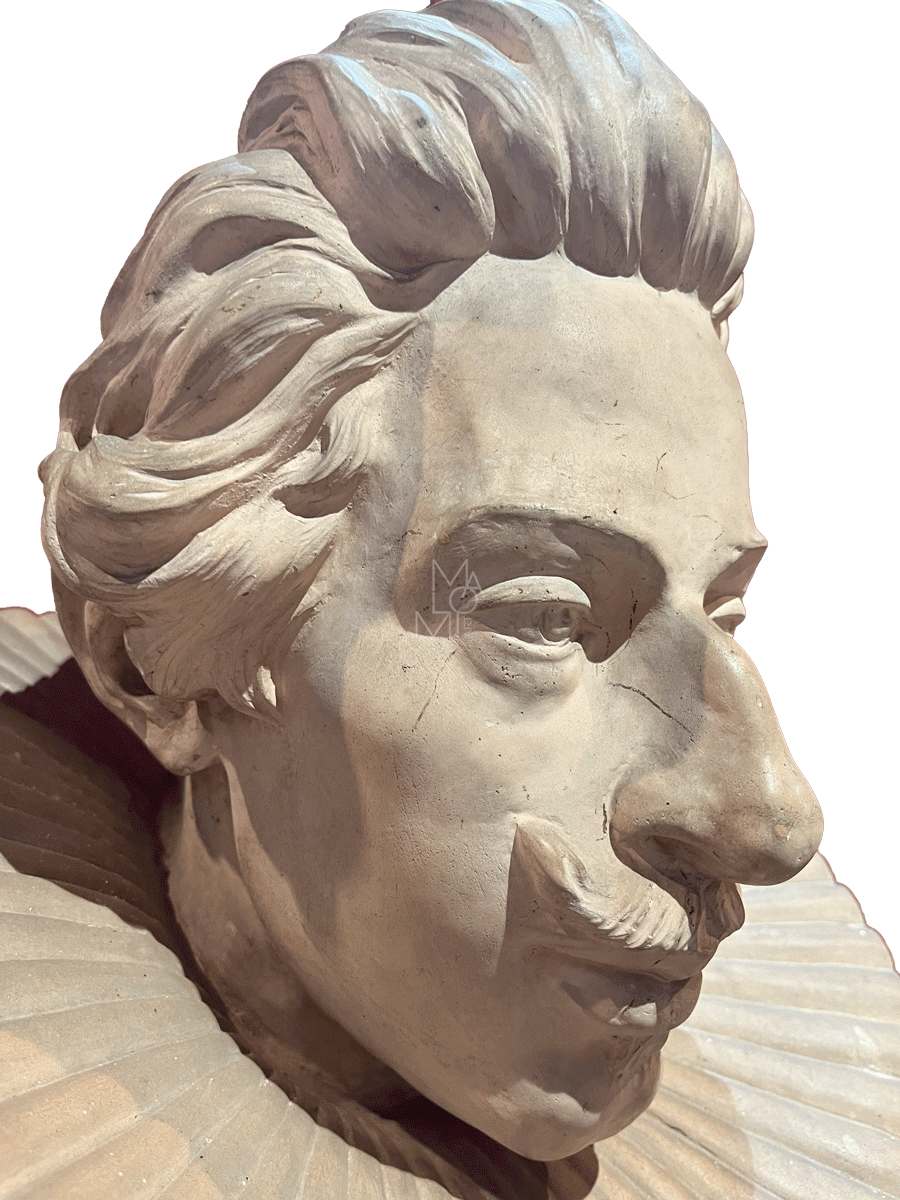
The work portrays Grand Duke Cosimo II de' Medici in strict adherence to the figurative canons of early 17th-century Tuscan court portraiture, originally codified by painters such as Justus Suttermans and sculptors within the granducal circle. The physiognomic traits of the Medici ruler are rendered with a pronounced institutional solemnity and a somatic precision that mirrors the monumental prototypes in marble, bronze, or porphyry executed for dynastic celebration:
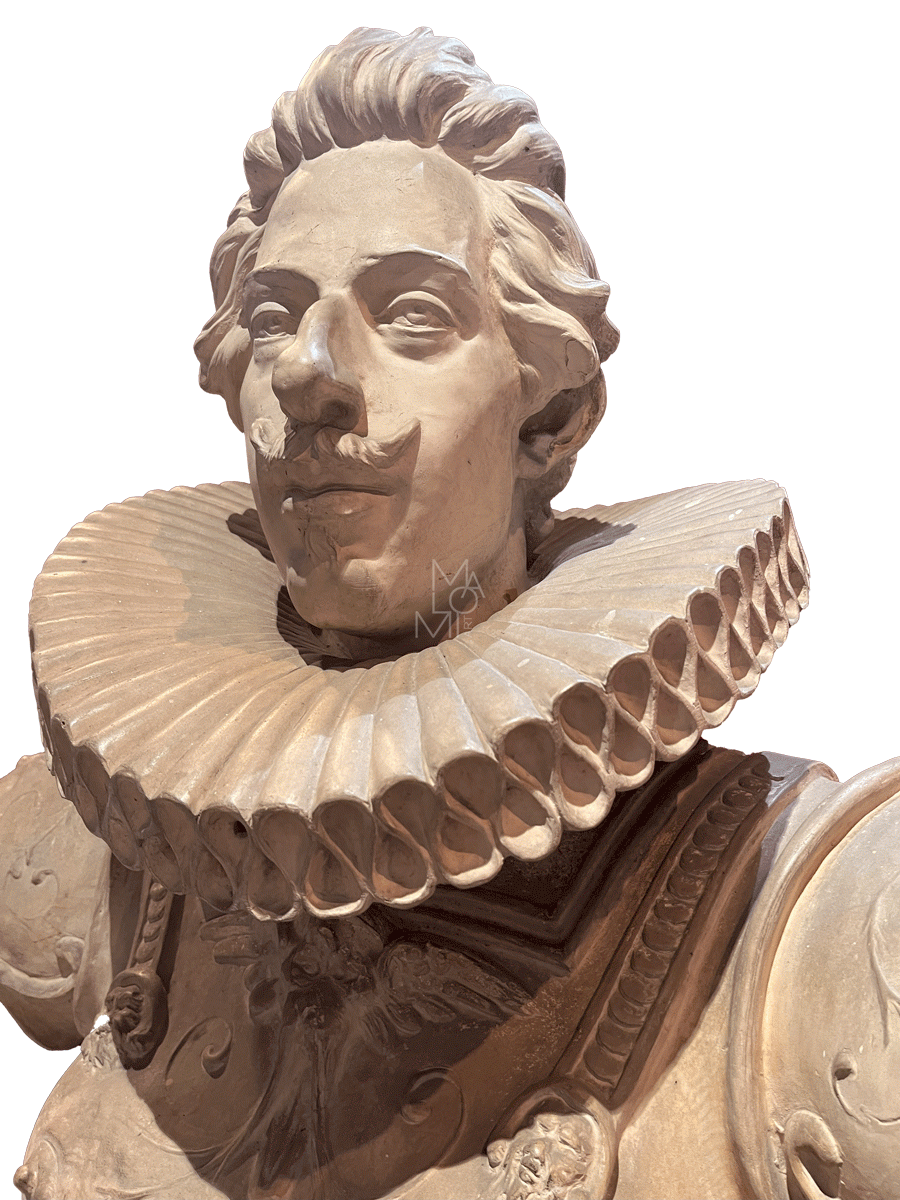
- The face: Characterized by elongated features, a prominent aquiline nose, and vivid eyes fixed in a stern, authoritative gaze.
- The beard: Features the distinctive upturned mustache paired with a short, geometric goatee on the chin, in keeping with the aristocratic fashions of the early Seicento.
- The hair: A voluminous, wavy mass swept upward and defined by tightly wound plastic curls, vigorously modeled to impart visual dynamism to the upper portion of the sculpture.
The rigidly frontal and hieratic posture fulfills the precise propaganda requirements of the Medici dynasty, designed to project political stability, authority, and institutional majesty. This specific effigy draws directly upon Late Renaissance and Baroque sculptural models, wherein the sovereign's features transcend mere naturalistic or vernacular description to become a pure manifesto of power and dynastic legitimization.
The vestimentary apparatus and honorific insignia
The torso is distinguished by a meticulous, rich, and almost calligraphic rendering of military and civil ceremonial attire, which delineates the social and political status of the depicted ruler:
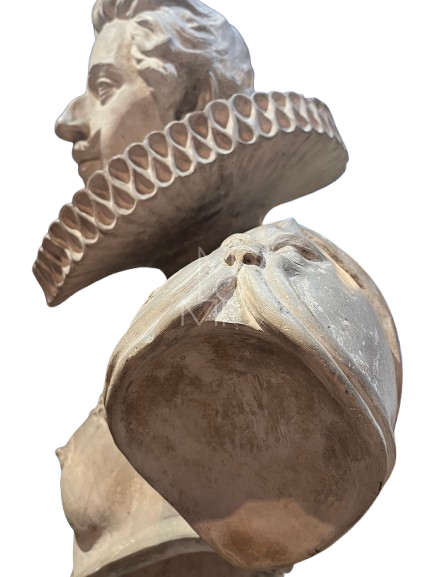
- The ruff (gorgiera a cannelli): The Grand Duke’s neck is encircled by a monumental, elaborately pleated linen structure known as a "millwheel" or "lettuce" ruff. This rigid, geometrically cadenced textile element represents the quintessential status symbol of late 16th and early 17th-century European courts, retained in official Tuscan portraiture as an emblem of high lineage and strict courtly etiquette.
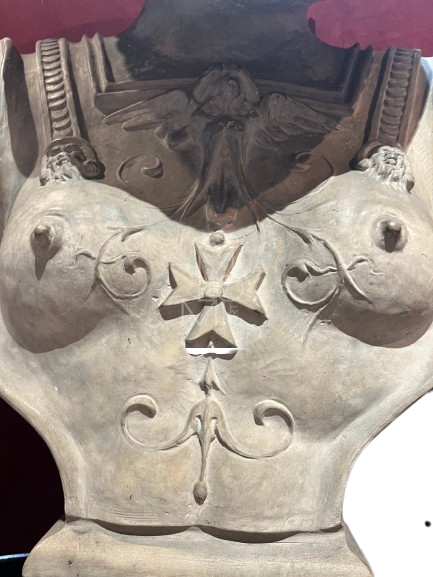
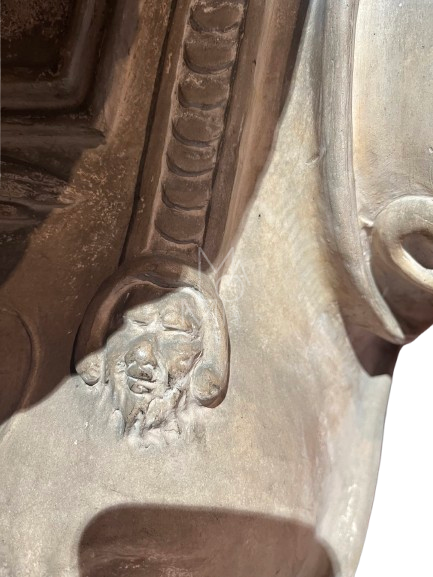
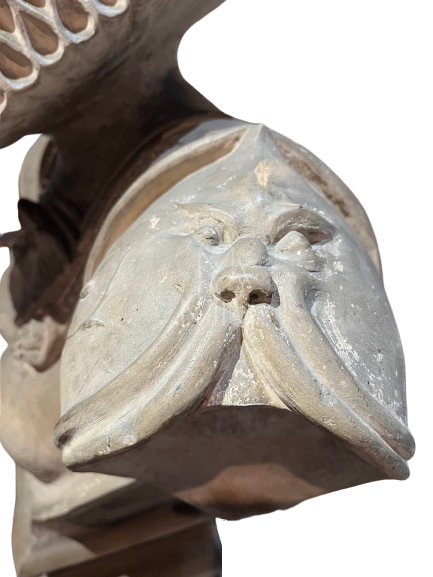
- The parade armor: The chest is protected by a finely chased cuirass, completed at the shoulders by articulated pauldrons decorated with phytomorphic volutes and low-relief tendrils that emulate the virtuoso metalwork of historical Florentine armors.
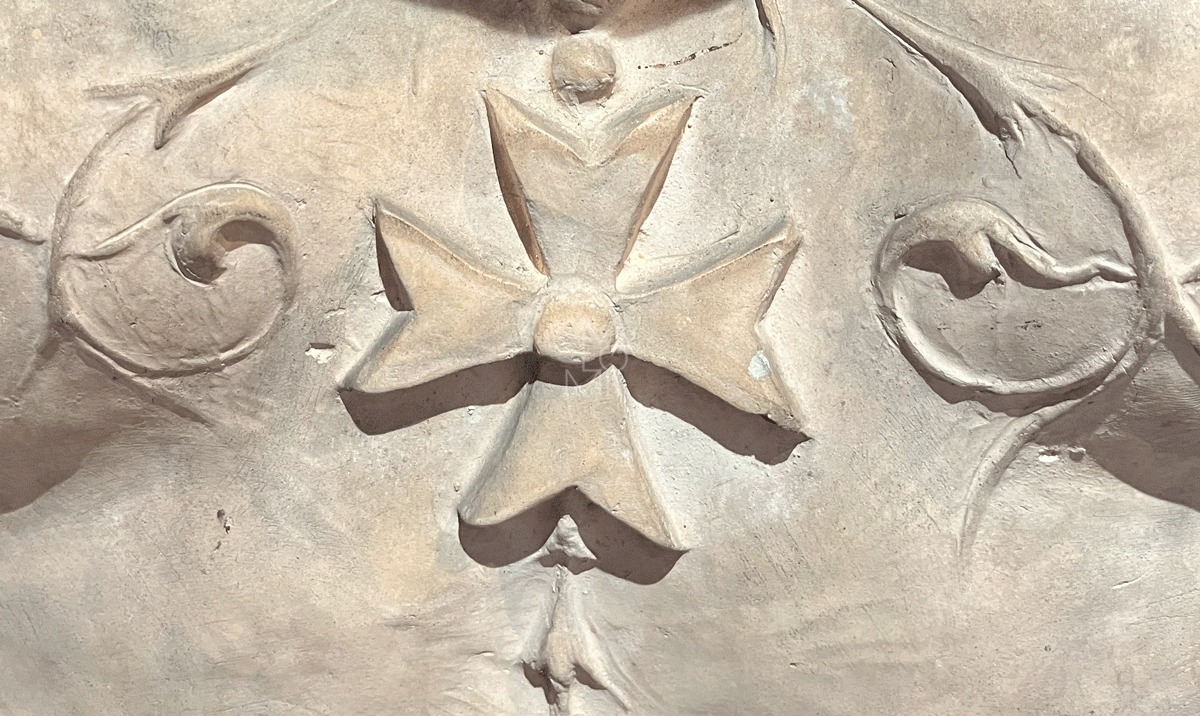
- The cross of the Order of Saint Stephen: Emblazoned prominently at the center of the breastplate is the eight-pointed cross of the chivalric order founded by Cosimo I in 1561 to combat Barbary piracy in the Mediterranean. Its inclusion is no mere decorative embellishment; it signifies the Grand Duke's role as Grand Master of the Order, underscoring his political, military, and religious legitimacy on the maritime stage.
The Manifattura di Signa and the revivalist taste between the 19th and 20th centuries
Founded in 1895 by Camillo Bondi near Florence, the Manifattura di Signa established an international reputation based on a unique industrial and artistic specialization: the scientific and philological reproduction of masterpieces from classical, Renaissance, and granducal Tuscan sculpture [I1, I2].
- The philosophy: The primary objective of the workshop was by no means antiquarian forgery or deception, but rather a sophisticated, high-craftsmanship reinterpretation designed to adorn the expansive gardens, reception halls, and palatial residences of the burgeoning international haute bourgeoisie, who were deeply captivated by the myth of the Italian Renaissance.
- The patination technique: To mitigate the natural chromatic brightness and sheen of raw terracotta freshly drawn from the kiln, Bondi developed and patented intricate mixtures composed of beeswax, calcareous mineral powders, natural earths, and volatile acids. This surface chemical-physical treatment imparted a weathered, sagramato (slurried), and matte appearance to the clay, closely replicating the surface porosity of ancient marbles exposed to atmospheric agents or historical museum plaster casts, thereby delightfully deceptive to the viewer's eye.
Historical focus on the original catalogs and variants of model no. 524
The core of the scientific inquiry into this bust resides in the structure of the commercial and art catalogs published by the manufacturer at the turn of the century. The Bondi brothers did not conceive their registers as mere sales lists, but rather as a monumental, paper-based museographical apparatus intended to reconstruct an "imaginary museum of Western sculpture":
- The logic of number 524: Within the section dedicated to Medici portraiture from the Palatine Gallery of Palazzo Pitti and the Museo Nazionale del Bargello, the numerical code 524 uniquely identified the ceremonial format of Cosimo II de' Medici. This enabled foreign patrons and overseas collectors to order the work from afar with the absolute certainty of receiving a replica identical in its overall proportions.
- The patination variants: While the plastic volume and the formative mold remained invariant to preserve the faithful structural configuration, the catalog of the Manifattura di Signa offered clients the option to customize the surface finish depending on the decorative setting. Model no. 524 was primarily declined in three variants:
- Variant in natural sagramata terracotta: Characterized by matte grey-beige patinas and calcareous washes, designed to emulate Renaissance workshop models or historical gallery plaster casts, aligning perfectly with the exemplar under analysis.
- Variant patinated as imitation bronze: Treated with dark acids and metallic powders to simulate the monumental bronze castings found in Florentine cathedrals and piazzas.
- Variant for outdoor (garden) use: Subjected to a partial hydrophobic treatment to withstand weathering, destined for facade niches or the limonaie of historic villas.
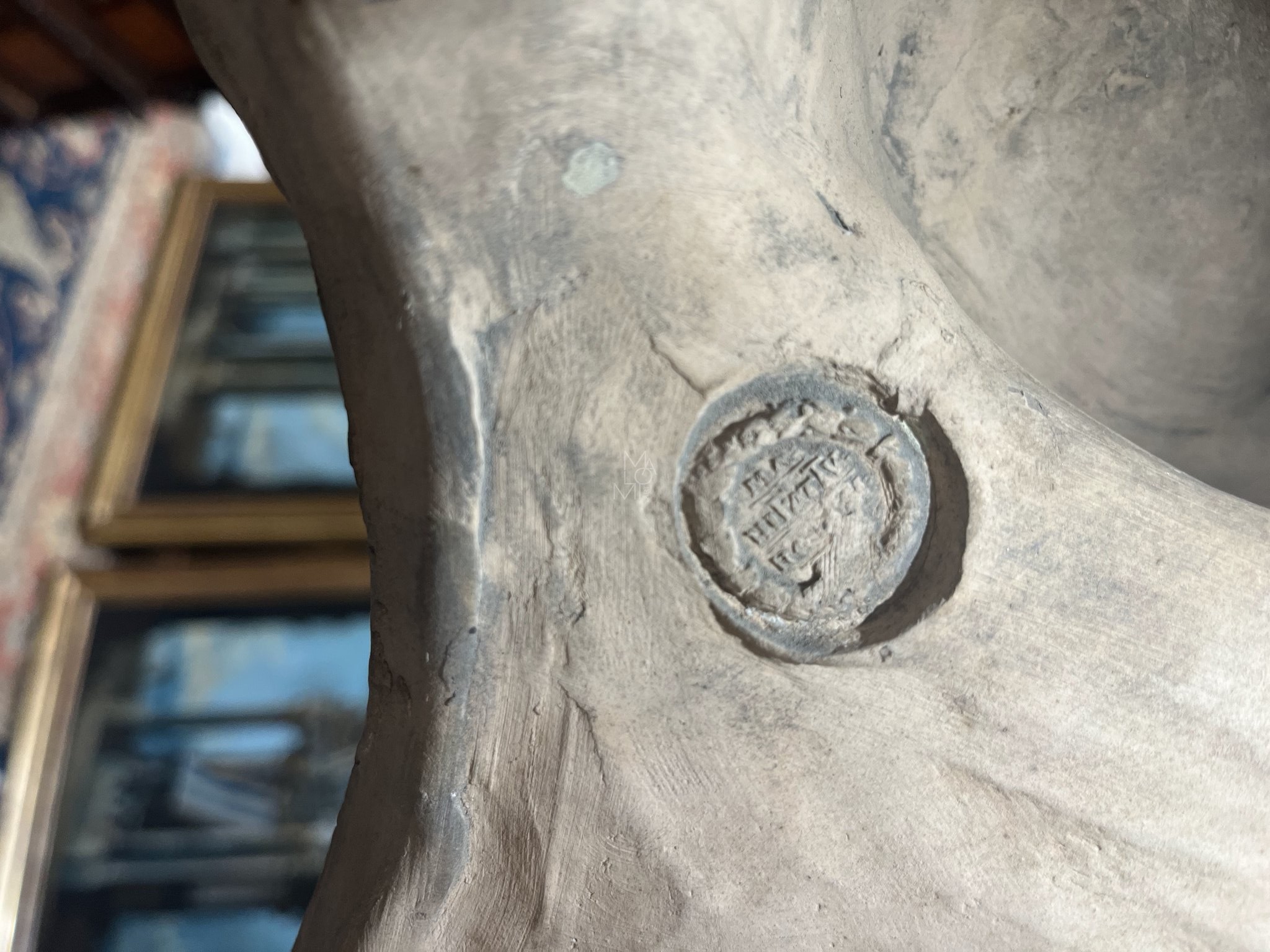
- The mounting variants: Factory records document that the bust could be purchased individually—prepared for niche installation via rear hollowing—or paired with customized scrollwork pediments and tall, fluted support columns. The model no. 524 under examination retains its original configuration intended for niche or grand salon display, featuring the factory punch-mark stamped within the interior of the torso as a guarantee of quality control upon firing.
Epigraphic analysis of the stamp and documentary value
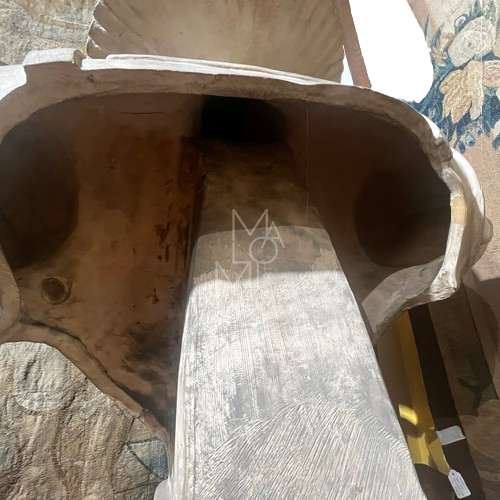
A close inspection conducted within the posterior cavity of the torso revealed a circular seal impressed with a matrix into the wet clay prior to firing. The text, rendered in lapidary characters distributed across three parallel registers, reads:
{MANIFATTVRA}}} {DI SIGNA}}} {N. 524}}}
This trademark constitutes the official identity card of the piece, precluding any ambiguity regarding its origin. The presence of the intact and clearly legible stamp significantly enhances the collectible and antiquarian value of the work, positioning it within the highly specialized and sought-after market for artistic Signa ceramics.
Sculptural technique, hollowing, and structural anatomy of the reverse
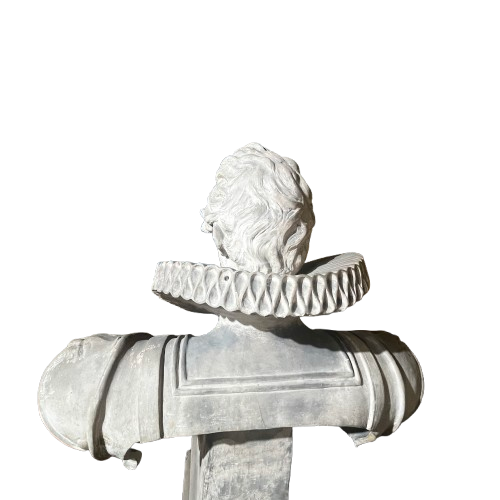
A close geometrico-structural examination of the reverse of the bust reveals rare insights into the refined plastic engineering applied by the Manifattura di Signa for large-format pieces:
- The central discharge pillar (supporting core): The most salient feature is the thick vertical rib or earthenware pier that traverses the internal cavity perpendicularly, anchoring itself to the base. This pillar functions as a true structural "exoskeleton." Unlike ancient busts, which were entirely hollow, the stability of a 90 cm high work composed of marly clay required an internal spine capable of supporting the massive weight of the shoulders and head during the delicate phases of air-drying and subsequent firing, thereby preventing warping or collapsing of the raw medium.
- The asymmetric bilateral hollowing: To either side of the pillar open two deep, symmetrical pockets that penetrate the mass corresponding to the pauldrons of the armor. The extraction of material at these critical junctures was executed with great decisiveness; the outer perimeter walls maintain a calibrated and uniform thickness, drastically reducing internal stresses caused by thermal shrinkage within the kiln during high-temperature firing.
- Structural traces and lines of force: The interior surface is left unpolished, preserving the fossil-like prints of its manufacture. One can discern the parallel ridges generated by the sweep of a flexible wire loop tool, interspersed with manual smoothing pressed to compact the internal cohesion of the planes. On the internal left side, a darker chromatic variation is observable, indicative of the natural migration of mineral salts (primarily iron oxides) that surfaced during forced firing using traditional wood or coal kilns.
- State of preservation of the interior: The reverse demonstrates a complete absence of structural shrinkage cracks or fissures from rapid cooling, testifying to a flawlessly executed firing cycle. A light veil of white calcareous dust—the residue of the parting agent utilized within the plaster counter-mold—still coats the deepest and most sheltered recesses of the structure.
Critical contextualization and fortune in the antiquarian market
The correct chronological placement of this bust between the late nineteenth and early twentieth centuries allows for a comprehensive understanding of the Gusto Renaissance or Revival phenomenon. This aesthetic wave swept through the patronage of the international haute bourgeoisie, who were eager to surround themselves with symbols of past Medici splendor. Premier workshops such as Signa did not merely engage in serial production; they elevated the casting process into a true philological study of ancient sculpture.
The molds were taken under rigorous protocols directly from the original masterpieces, ensuring proportions identical to the millimeter. Today, works bearing the original stamp of the Manifattura di Signa are subject to a major critical reappraisal by art historians and collectors alike: they are no longer dismissed as mere decorative copies, but are instead esteemed as refined testaments to a golden age of Tuscan artistic craftsmanship, endowed with an autonomous aesthetic dignity and a solid valuation within the elite antiquarian market.