The conservation of ancient stone: a technical guide for historic estates and private collections
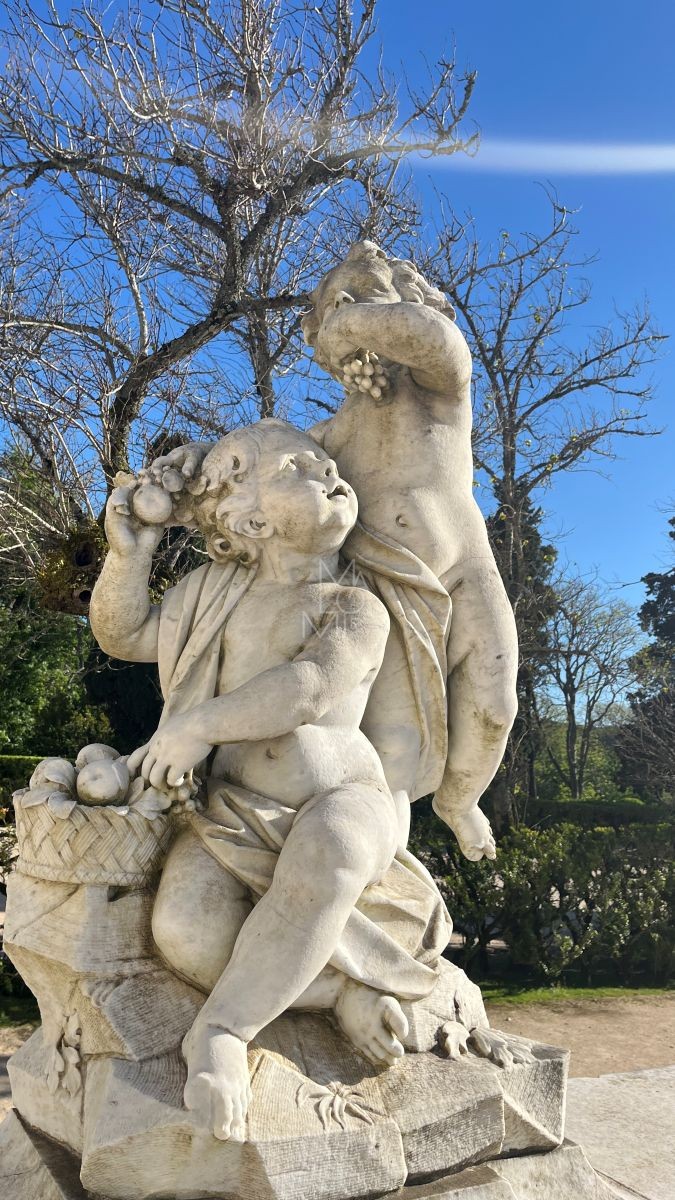
The breath of time in ancient stone
Ancient stone is not a mere building material or an inert decorative element, but a fragment of living history that preserves a millennial memory within its veins. In prestigious historic homes, preserving these artifacts and integrating sculptural elements require an educated approach capable of combining the rigor of restoration chemistry with the sensitivity of interior architecture and landscaping. Historic stone materials are, by their very nature, porous and biologically active, meaning they constantly interact with the surrounding environment. Anyone managing a period estate or a private collection must develop a deep awareness of this interaction, moving past the misconception that stone is eternal and immutable. On the contrary, it breathes, reacts to the seasons, changes through contact with humans, and is even affected by the micro-vibrations of the urban fabric. Safeguarding this heritage means accepting that the material shifts and transforms over time, accompanying the life of the home with elegance and authenticity, while remaining vigilant so that natural aging does not turn into irreversible decay.
The pillars of conservative restoration
Before intervening on any ancient stone surface, it is essential that architects and clients share the golden rules codified by modern restoration theories, concepts that find their roots in the theoretical reflections of Cesare Brandi. The first core principle is that of minimal intervention, which dictates acting only when strictly necessary for the survival of the artifact. The patina of time is not dirt to be eliminated, but an irreplaceable historical and aesthetic value to be protected, as it bears witness to the passing of centuries and confers true nobility upon the work. The second pillar is compatibility, according to which any material introduced during maintenance or consolidation must be chemically and physically akin to the original stone. For this reason, modern cements and silicones are strictly banned and replaced by natural hydraulic lime and selected historic aggregates that do not introduce harmful salts. Finally, the principle of reversibility establishes that any applied treatment, from grouting to surface protectives, must be removable in the future without altering or damaging the original substrate, leaving the door open for future, more advanced restoration technologies.
Material anatomy and specific protocols
In world-class restoration, a one-size-fits-all approach does not exist, and each lithotype responds to different decay dynamics that require dedicated and targeted strategies. Master stonemasons of the past understood the secrets of quarries and knew that stone extracted in winter behaved differently from stone gathered in summer—an empirical knowledge that conservation science has now translated into precise chemical and physical protocols for each specific variety.
Marble and the vulnerability of classical splendor
A metamorphic rock composed mainly of calcium carbonate, marble offers a sumptuous beauty that walks hand in hand with extreme chemical sensitivity. Its crystalline structure, which has fascinated sculptors throughout the ages, makes it vulnerable to acid attacks. Any contact with citric acid, vinegar, wine, or, outdoors, modern acid rain, provokes an immediate corrosive reaction that destroys the surface polish, creating irreversible dull spots known in the trade as acid etches. A famous anecdote regarding Michelangelo Buonarroti recounts that the sculptor personally selected his blocks in Carrara, looking for a compactness that could withstand even the harshest climates, well aware that iron inclusions could rust over time.
For the routine cleaning of ancient marble, it is necessary to use exclusively demineralized water and neutral detergents with a pH of seven, strictly avoiding common commercial anticalcare products that would dissolve the stone itself. For stain protection, solvent-based micro-technological treatments are applied, which penetrate the micropores without creating artificial plastic films, thereby preserving the material's natural breathability. In the presence of deep scratches or widespread dullness, the protocol calls for mechanical micro-honing with ultra-fine diamond pads, followed by polishing with tin oxide powders—a process that restores the original refraction without altering the historical thickness of the slab.
Tuff and the porosity that breathes with history
Tuff is a soft, volcanic, pyroclastic rock, a highly hygroscopic material that absorbs and releases large volumes of moisture due to its spongy structure. Widespread in the historic architecture of central and southern Italy, this material allowed for the birth of entire underground cities, such as the Sassi di Matera or the architectures of the Roman countryside, proving an extraordinary structural resilience when maintained in its original microclimate. However, when isolated and used for decorative elements or outdoor low walls, tuff reveals its intrinsic fragility when faced with freeze-thaw cycles. Rainwater penetrates deep into the pores and, by freezing during the winter, expands in volume, generating disastrous internal stresses that lead to crumbling, pulverization, and the detachment of entire flakes of material.
The maintenance of tuff strictly rules out the use of high-pressure washers, whose violent impact would crumble the porous surface, erasing the historical traces of chisel craftsmanship. The removal of black crusts or biological patinas must be carried out using poultices of cellulose pulp soaked in ammonium bicarbonate solutions, which act via capillarity without stressing the stone. To arrest pulverization, ethyl silicates are applied—consolidants capable of recreating internal mineral bonds without occluding porosity. The final treatment involves the use of a highly breathable siloxane water-repellent, which is essential to allow the stone to continue exchanging vapor with the outside, preventing moisture from remaining trapped within the core of the masonry.
Pietra serena and the delicacy of the Renaissance tradition
Pietra serena is a gray sandstone formed by quartz grains bound together by a predominantly clayey cement, and it has become the undisputed symbol of Florentine architecture, celebrated by Giorgio Vasari and utilized by Filippo Brunelleschi for the colonnades of San Lorenzo and the Ospedale degli Innocenti. Vasari himself described its defects in his Lives, warning that pietra serena suffers from humidity and extreme cold, tending to crack if quarried from the wrong veins. The presence of the clay matrix makes it highly hydro-sensitive and, upon prolonged contact with water, the internal minerals swell, triggering the dreaded phenomenon of exfoliation, which develops parallel to the sedimentation lines of the rock.
Caring for this material dictates minimizing water washes, scheduling them solely during warm seasons to guarantee rapid and complete drying. Pietra serena requires nanophase water-repellent protectives that do not turn its characteristic gray-blue color into an artificial wet effect—an aesthetic error that would jeopardize the chromatic harmony typical of Renaissance settings. For historic interior floors, which are particularly prone to greasy stains due to the sandstone's high absorbency, the protection of choice consists of periodically applying a very thin layer of purified natural beeswax, which is then buffed with soft cloths to create a satin, silky shield that protects without occluding.
Slate and the dark impermeability to protect from scratches
A foliated, fissile metamorphic rock, slate is famous for its natural impermeability and for the ease with which it can be split into thin slabs—a characteristic that made it the favored material for roof coverings in Liguria and northern France, as well as for crafting prestigious fireplaces and billiard tables. A historical curiosity links slate to the academic world, as its dark uniformity and resistance to light abrasion made it the ideal medium for blackboards worldwide. Although its resistance to atmospheric agents is excellent, its lamellar structure makes it vulnerable to mechanical abrasions and deep scratches, which leave highly visible whitish gashes against the dark, matte background.
Indoors, using hard water rich in lime creates unsightly whitish patinas that dull the original color intensity of slate. Washing must therefore be carried out with neutral detergents and softened water, while to eliminate any lime deposits that have already formed, one must use properly buffered, slightly acidic solutions, taking care to rinse immediately so as not to etch the stone. To preserve the depth of the slate or anthracite color, the traditional protocol involves the application of raw linseed oil or calibrated natural resins, which are capable of saturating the surface microporosity, masking micro-scratches, and imparting a warm, deep finish that enhances the typical natural split finish.
Spatial management and preventive conservation
The maintenance of ancient stone does not end with the choice of detergent or chemical protective, but is grounded in proper environmental management. The geographical and spatial placement of the artifact within the property dictates the pace and typology of every intervention, transforming the architecture itself into a protective shield for the artwork.
Maintenance in interior spaces
In interior spaces, the main enemies of ancient stone are the accumulation of domestic dust, anthropogenic dirt, and the unaware use of aggressive commercial products. Dust, though seemingly harmless, contains microscopic fragments of silica which, under foot traffic or incorrect cleaning methods, act as a true abrasive, scratching the polished surfaces of marble or wearing away the waxy patinas of pietra serena. Dusting must therefore be performed regularly using dry microfiber cloths or vacuum cleaners equipped with soft natural bristle brushes. For daily cleaning, one must strictly exclude vinegar, lemon, bleach, and commercial anticalcare products, turning instead to diluted pure Marseille soap or professional formulations with a controlled pH. Special attention must also be dedicated to historic stone fireplaces, where residues of soot and water-soluble tar can penetrate the pores of the stone if wet, creating indelible dark stains that require specific poultices of sepiolite and organic solvents to be extracted.
Maintenance in exterior spaces
Outdoors, stone surfaces must withstand a lethal combination of acid rain, thermal shock, solar rays, and biological colonization. Mosses, algae, and lichens do not just represent an aesthetic problem, but they produce organic acids that chemically corrode the mineral substrate, while their microscopic roots penetrate into crevices, widening them from within. For the biological remediation of statues, fountains, and historic portals, it is necessary to apply specific restoration biocides via spray or brush, usually solutions based on quaternary ammonium salts, which eliminate microorganisms without damaging the stone. After letting the product act, one proceeds to a careful rinsing carried out exclusively with soft-bristled nylon brushes, avoiding the erosive action of high-pressure washers with uncontrolled pressure, which would strip away the precious historic patina. Furthermore, visible cracks and micro-fractures must be sealed promptly to prevent winter water infiltration, using elastic hydraulic mortars free of soluble salts that accommodate the thermal movements of the stone.
The art of placement and curatorial criteria
Positioning an ancient stone sculpture in a luxury residence or its park is a complex operation that requires a perfect balance between scenographic impact and the mitigation of conservation risks. Ancient stone dialogues with space and light, and its proper placement can enhance an entire architectural project or, conversely, accelerate the destruction of the artifact if microclimatic and structural factors are overlooked.
Perspective scenographies in the historic garden
In the design of the historic garden, the stone sculpture assumes the role of space regulator, ordering the landscape and acting as a visual focal point for the visitor. The masters of the Italianate garden, such as those who designed the Boboli Gardens in Florence or the parks of Venetian villas, used statues to create visual axes and perspective intersections, positioning them as backdrops for tree-lined avenues or inside niches carved into historic boxwood or yew hedges. The deep green of the vegetation acts as an ideal chromatic and volumetric contrast, highlighting the modeling and the chiaroscuro of the light-colored stone. However, outdoor positioning requires great caution.
It is vital never to place valuable sculptures directly under the drip line of tree canopies, as the constant dripping of rain laden with acidic tannins, resins, and guano accelerates erosion and fosters rapid biological recolonization. Another strict rule concerns contact with the ground, as sculptures must never rest directly on soil or turf. It is mandatory to interpose a pedestal or an insulating base, inserting an impermeable vapor barrier at the bottom. This technical measure blocks the capillary rise of water from the ground, which would transport soluble salts inside the sculpture; once the water evaporates, these salts would crystallize on the surface, causing destructive mechanical stresses and the subsequent microscopic detachment of the original matter.
Structural rigor and lighting in historic interiors
The interior environment offers optimal protection from atmospheric agents, but it introduces highly stringent engineering, structural, and lighting constraints that cannot be ignored. In period buildings characterized by wooden ceilings or historic jack-arch vaults, the weight of a monumental sculpture or a bust with its pedestal can easily exceed five hundred kilograms, requiring a preventive engineering assessment and a load study. High-mass works must be positioned in correspondence with the underlying load-bearing walls or main beams, carefully avoiding the center of the floor span to prevent structural sagging or elastic deformations of the floor. Furthermore, from a seismic prevention perspective, slender statues cannot simply be stood upright, but require retractable mechanical restraints and stainless steel pins anchored to the wall or load-bearing structure in an invisible yet solid manner.
From the standpoint of formal presentation, sculpture thrives on shadows and volumes, and the choice of lighting defines the perception of the work itself. Direct overhead lights or totally diffused lighting must be avoided, as they flatten the relief and erase the details of the sculptor's chisel work. The ideal configuration involves a main source inclined at approximately forty-five degrees relative to the axis of the work, positioned laterally and superiorly to enhance the chiaroscuro of the artifact. The light fixtures must be exclusively professional LEDs with a color rendering index higher than ninety-five, totally free from ultraviolet and infrared emissions—a fundamental requirement to eliminate localized thermal shocks on the stone surface that could cause differential micro-expansions and the degradation of the historic patina. Finally, microclimatic interaction dictates moving stone artifacts away from direct hot air flows coming from conditioning vents, radiators, or active fireplaces, since sudden changes in temperature and relative humidity accelerate the degradation of the mineral binders in the most sensitive stones.
English edition
(Chicago Manual of Style)
Amoroso, Giovanni G., and Vasco Fassina. 1983. Stone Decay and Conservation: Atmospheric Pollution, Cleaning, Consolidation and Protection. Amsterdam: Elsevier.
Brandi, Cesare. 2005. Theory of Restoration. Translated by Cynthia Rockwell. Rome: Istituto Centrale per il Restauro.
Henry, Alison, ed. 2006. Stone Conservation: Principles and Practice. London: Routledge.
Price, Clifford A., and Jeanne Marie Teutonico. 2011. Stone Conservation: An Overview of Current Research. 2nd ed. Los Angeles: Getty Conservation Institute.
Siegesmund, Siegfried, and Rolf Snethlage, eds. 2014. Stone in Architecture: Properties, Durability. 5th ed. Berlin: Springer-Verlag.
Vasari, Giorgio. (1568) 1907. Vasari on Technique: Being the Introduction to the Three Arts of Design, Architecture, Sculpture and Painting. Translated by Louisa S. Maclehose. London: J.M. Dent & Co.