Bartolomeo Colleoni
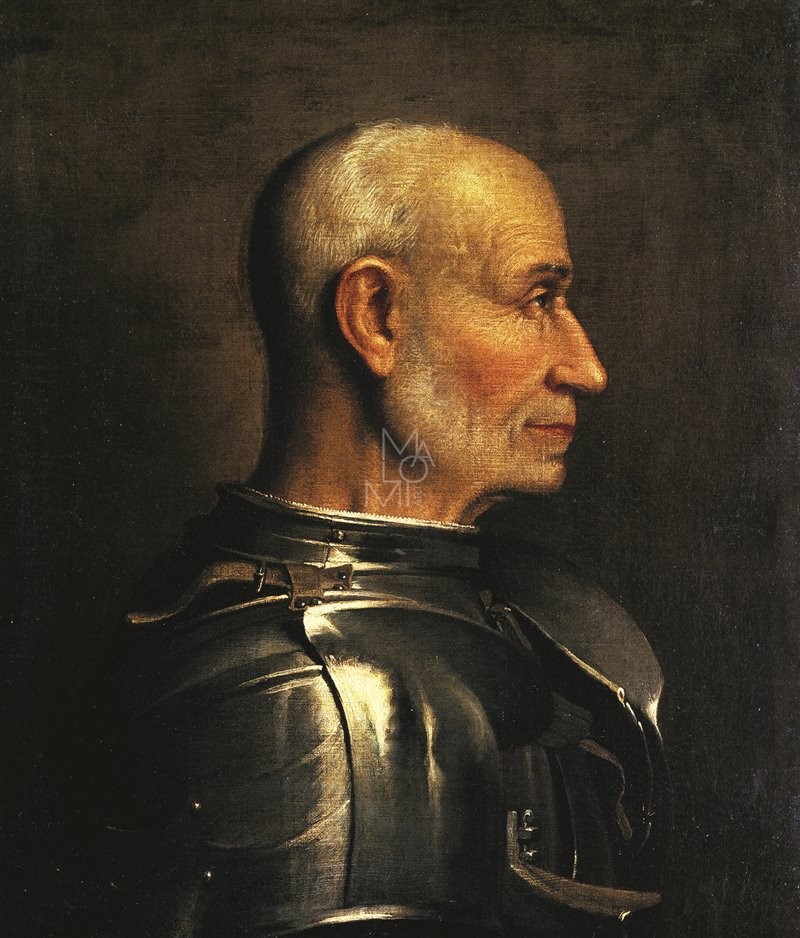
- A rigorous academic and historiographical analysis examining the life and legacy of Bartolomeo Colleoni, the preeminent fifteenth-century Italian condottiero. This study evaluates the philological structure of his military hire contracts (condotte) with the Republic of Venice and Milan, details his innovative use of field artillery at the battle of Molinella (1467), and explores the architectural evolution of his fortified network, including the castle of Malpaga. Finally, it decodes the humanistic iconographic program of the Colleoni chapel in Bergamo and tracks his modern critical reception.
The Captain General: Bartolomeo Colleoni between the Art of War, Geopolitics, and Patronage in the Renaissance
Introduction
The figure of Bartolomeo Colleoni represents one of the most brilliant and complex examples of the transition from Late Medieval warfare to nascent Renaissance pragmatism. As a condottiero, shrewd diplomat, and munificent patron, Colleoni inextricably linked his name to the history of the fifteenth-century Italian republics and duchies, embodying the quintessence of the Italian captain of ventura. This essay analyzes his biographical trajectory, the evolution of his military strategies, the complex political dialectic he maintained with the Republic of Venice and the Duchy of Milan, and his enduring monumental, castellated, and dynastic legacy.
- Origins and Youth: The Bergamasque Roots
Bartolomeo Colleoni was born in Solza, near Bergamo, around 1395, into a noble lineage of ancient Longobard extraction. The familial and geographical context of his youth was profoundly shaped by the political instability defining the borderland between the Duchy of Milan and the mainland domains (Stato da Màr) of the Republic of Venice.
Bartolomeo’s childhood was marred by violent civic feuds and, most notably, by the tragic assassination of his father, Paolo Colleoni, perpetrated by relatives of the same faction within the castle of Trezzo sull'Adda. This event resulted in the confiscation of the family’s assets and the premature loss of their patrician status. Forced exile and the necessity for social redemption drove the young Bartolomeo to pursue a military career as his sole path toward emancipation and economic elevation. He acquired the initial rudiments of the military profession at the court of Filippo Arcelli in Piacenza, later refining his skills within the turbulent theater of Southern Italy, where he campaigned under the banners of Braccio da Montone and subsequently served Muzio Attendolo Sforza.
- The Geopolitical Context and Military Pendulismo
The Italian fifteenth century was characterized by a geopolitical fragmentation wherein the peninsula's major powers were locked in a debilitating conflict for hegemony. In this arena, the mobility of condottieri represented a structural constant. Colleoni was no exception, tying the greater part of his career to the service of the Most Serene Republic of Venice, while alternating these periods with crucial phases of militancy for the Duchy of Milan.
His relationship with Venice began stably in 1431 under the command of the celebrated Erasmo da Narni, known as Gattamelata. During this phase, Colleoni distinguished himself through a series of brilliant operations across the Po Valley and the lacustrine area of Lake Garda. However, the chronic distrust of the Venetian patriciate and enticing Milanese offers prompted him to transition, between 1443 and 1447, to the service of Filippo Maria Visconti. The condottiero’s strategic flexibility emerged further following Visconti’s death, when he swore allegiance to the newly established Ambrosian Republic, before making a definitive and triumphal return to the banners of the Lion of Saint Mark in 1455, the year he secured his appointment as Captain General of the Republic of Venice for life.
- Philological Analysis of Archival Documents and Condotta Contracts
The scientific study of Bartolomeo Colleoni cannot bypass a rigorous philological examination of primary sources, which are preserved predominantly within the State Archives of Venice, the State Archives of Milan, and the rich repository of the Luogo Pio Colleoni in Bergamo. Among the documents of greatest historical and diplomatic significance are the contracts of hire (the condotte), which meticulously regulated the legal and economic relationship between the captain and the hiring states.
A diplomatic reading of these texts reveals Colleoni’s transition from a mere captain of fortune to a true military entrepreneur. The contractual clauses defined with scientific precision the number of "lances" (tactical units typically composed of a knight, a corporal, and a page), the mobilization timelines, and, crucially, the provvigione (base salary) and the piatti (extraordinary allowances). The condotte stipulated with the Serenissima in 1455, and subsequently renewed, highlight the specificity of the Captain General's role. Unlike standard contracts, Colleoni’s lifelong condotta did not merely mandate military obligations; it included complex clauses of political fidelity and non-offense, effectively functioning as a geopolitical alliance treaty. The analysis of contemporary accounting ledgers attests to the enormous influx of gold ducats into the condottiero’s coffers, enabling him to finance his court and structure a dense network of loans and landed investments across the Venetian mainland.
- Tactical Innovation and the Masterful Engagement at Molinella (1467)
The scientific-military renown of Bartolomeo Colleoni lies in his ability to interpret the technological mutations of the era, particularly the advent and progressive standardization of firearms. He did not limit himself to commanding traditional heavy cavalry charges but introduced significant innovations in the coordinated deployment of combined arms. Colleoni was among the first to grasp the strategic potential of mobile artillery on the battlefield. Under his direction, cannons and culverins ceased to be tools reserved exclusively for static sieges and were integrated into field maneuvers.
The pinnacle of his tactical maturity and his most famous pitched battle occurred at the Battle of Molinella (also known as the Battle of Riccardina), fought on July 25, 1467. The conflict arose from the repercussions of the succession within the Duchy of Milan following the death of Francesco Sforza. Colleoni, formally serving a coalition of anti-Medicean Florentine exiles led by Diotisalvi Neroni and covertly backed by Venice, clashed with the army of the Italian League led by Federico da Montefeltro.
The engagement at Molinella represented a turning point in European military history due to the unprecedented and massive deployment of portable firearms and light field artillery. Colleoni positioned his troops by masterfully exploiting the marshy terrain of the Bolognese countryside, alternating cavalry charges with rapid retreats protected by the fire of hand-gunners (schioppettieri). The battle became legendary for its ferocity and duration, lasting over half a day under the summer sun. It concluded without a definitive victor on the field but consecrated Colleoni's reputation as a master of military transition; for the first time, artillery was used not as a mere peripheral asset, but as the pivotal axis around which the entire maneuver of containment and counter-attack revolved.
- The Venetian Triumph and the Lifelong Capitanato
The signing of the Peace of Lodi in 1454 inaugurated a period of relative equilibrium within the Italian peninsula, terminating the grand wars of territorial expansion. In this altered scenario, the Republic of Venice sought to secure the prestige and competence of the Bergamasque condottiero on an exclusive basis, thereby preventing his potential employment by rival powers.
In March 1455, during a solemn ceremony in Saint Mark's Basilica, Doge Francesco Foscari presented Colleoni with the baton of command, appointing him Captain General of all the mainland land forces of the Serenissima. This lifelong appointment guaranteed him an astronomical stipend and extraordinary political stability for the era. Although the subsequent years witnessed no major decisive military campaigns, Colleoni performed a fundamental function of geopolitical deterrence. His headquarters became a diplomatic hub of primary importance, where the condottiero managed a vast intelligence network and maintained transalpine ties, even being solicited by Charles the Bold, Duke of Burgundy, for a military condotta within French territories.
- The Court of Malpaga: Patronage and Self-Representation
In his mature years, Colleoni progressively withdrew to the Castle of Malpaga, situated in the Bergamasque plain and purchased in 1456. The fortress was transformed from an austere military outpost into a sumptuous Renaissance court, reflecting the condottiero’s humanistic ambitions.
At Malpaga, Colleoni surrounded himself with men of letters, jurists, and artists, promoting a sophisticated policy of iconographic self-representation. The castle's frescoes, commissioned to celebrate the visit of King Christian I of Denmark in 1474, constitute a visual testament to courtly magnificence and the quasi-sovereign status achieved by the captain. Beyond artistic commissions, Colleoni’s patronage expressed itself through major works of public utility and devotion, including the foundation of the Luogo Pio Colleoni in Bergamo to support impoverished young women, and the construction of the monumental Sanctuary of the Basella in Urgnano.
- Fortification Strategies and the Architectural Evolution of the Castellated System
Bartolomeo Colleoni's political and economic maturity translated territorially into an extraordinary feat of military and castellated engineering. The condottiero did not conceive his castles as mere passive defensive elements, but rather as interconnected nodes of an integrated territorial system flanking the Bergamasque ditch (fosso bergamasco), the strategic border separating the Milanese and Venetian domains. The fortresses of Malpaga, Urgnano, and Romano di Lombardia demonstrate the crucial transition from Late Medieval military architecture to the earliest defenses calibrated for the advent of artillery (the so-called all’antica or modern transition).
- The Castle of Malpaga: Surrounded by a double ring of walls and a deep, floodable moat. The curtain walls were equipped with battlements featuring defensive walkways and, innovatively, the corner towers were modified to accommodate firing positions for light firearms and small-caliber artillery pieces. The building merged rigid defensive geometry (a square plan with a central courtyard) with spacious, frescoed residential quarters, defining the Renaissance model of the "castle-residence."
- The Rocca of Urgnano: Entering the condottiero’s possessions in 1454, the fortress features a square plan with four cylindrical corner towers. This architectural choice was introduced precisely to mitigate the impact of early bombard shots, which deflected off curved surfaces rather than striking orthogonally against perpendicular walls. Colleoni strengthened the system of drawbridges and entry ravelins, transforming the complex into an almost impregnable outpost along the arterial routes leading toward the Cremasco region.
- The Castle of Romano di Lombardia: A pre-existing structure from the Visconti era, it came under Colleoni's control during his condotte for the Serenissima. The captain implemented profound structural modifications, reinforcing the central keep (Torre del Ceppo) and adapting the external walkways to facilitate the rapid movement of armed contingents and light artillery pieces. Romano served as a vital logistical hub for storing victuals, gunpowder, and mounts.
- The Iconographic and Symbolic Program of the Colleoni Chapel in Bergamo
The Colleoni Chapel, erected between 1472 and 1476 in Bergamo Alta, constitutes a political, dynastic, and theological manifesto of extraordinary complexity, designed to celebrate the virtus of the condottiero within a framework of Christian glorification. The architectural and sculptural project by Giovanni Antonio Amadeo translates a dense network of humanistic allegories into Istrian stone and polychrome marbles.
The facade presents a synthesis of Late Gothic Lombard tradition and Renaissance classicism. The bas-reliefs depicting the stories of Genesis and the Labors of Hercules, positioned at the base of the pilasters, do not reflect a merely eclectic taste. Hercules embodies Fortitude and earthly justice—cardinal virtues of the condottiero—which find their fulfillment and redemption within the biblical narratives of salvation and sacrifice.
Internally, the symbolic focus is entirely catalyzed by Bartolomeo’s funerary monument. The double sarcophagus with superimposed chests is surmounted by a gilded wooden equestrian statue, executed by Sisto and Sirio of Nuremberg. The statue does not depict the captain in the fury of battle, but rather in a hieratic and monumental pose that revives Roman imperial iconography. The bas-reliefs of the lower chest depict scenes from the Passion of Christ, indissolubilmente linking Colleoni's destiny and memory to the mystery of the Resurrection. Meanwhile, statues of the Virtues (Justice, Fortitude, Prudence, and Temperance) surround the monument, visually certifying the moral qualities that legitimized his earthly power and his extraordinary social ascent.
The desire to perpetuate his memory found a parallel fulfillment in the bronze equestrian monument in Venice, commissioned by testamentary bequest. Erected in the Campo dei Santi Giovanni e Paolo and executed by Andrea del Verrocchio, the monument portrays the condottiero caught in a motion of fierce and dynamic majesty, an eternal incarnation of the pride and military authority of the Quattrocento.
- Historiographical Fortune: From Renaissance Chronicles to Modern Criticism
The critical reception and historiographical fortune of Bartolomeo Colleoni have undergone a profound evolution across the centuries, oscillating between humanistic encomiastic celebration and modern scientific-documentary analysis. The construction of the Colleoni "myth" began while the condottiero was still alive, driven by court humanists and chroniclers dedicated to legitimizing his political status and military virtus.
During the fifteenth and sixteenth centuries, the earliest biographies—most notably the Vita Bartholomei Coleonei by the humanist Antonio Cornazzano, written around 1476—delineated his profile according to the classical canons of the vir illustris. Operating a refined fusion of encomiastic rhetoric and historical chronicle, Cornazzano compared the exploits of the Bergamasque captain to those of the great generals of Roman antiquity, emphasizing qualities such as prudence, temperance, and an innate loyalty—the latter being a virtue by no means guaranteed within the landscape of condottieri. During the same period, Venetian and Milanese chronicles, though influenced by their respective political agendas and territorial tensions, could not avoid recognizing his extraordinary tactical skill and his role as a pivot within the peninsular balance of power.
Between the seventeenth and nineteenth centuries, Enlightenment and subsequently Romantic historiography partially shifted this perspective. Authors such as Pietro Verri and the historians of Risorgimento historiography embedded the figure of Colleoni within the broader and more problematic debate concerning the institution of the condotta and Italian political fragmentation. While the condottiero was occasionally criticized for the economic cynicism intrinsic to the fifteenth-century mercenary market, nineteenth-century local historiography conversely exalted his visceral connection to the Bergamasque territory and his munificence as a patron, transforming him into a symbol of civic pride and identity.
The methodological turning point was achieved in the twentieth century with the advent of scientific historiography and the systematic utilization of archival sources. The pioneering studies of historians like Bortolo Belotti, author of a monumental and indispensable critical biography of the condottiero, liberated Colleoni's figure from mythological and anecdotal accretions. Modern and contemporary criticism—enriched by contributions from scholars of military history and Venetian institutions, including the seminal synthesis by Michael Mallett—has repositioned Colleoni within the complex dynamics of the "State of the Renaissance." Today, historiography no longer views him merely as a highly brilliant captain of fortune, but as a multifaceted, transitional figure: a shrewd military manager, a conscious geopolitical actor, and a deliberate manipulator of artistic and monumental languages aimed at ensuring the immortality of his name and lineage.
Appendix A: Detailed Chronology of Military Condotte and Changing Allegiances
|
Years |
Hiring State / Power |
Role and Historical Context |
Principal Adversaries / Notes |
|
1419–1424 |
Filippo Arcelli / Braccio da Montone |
Military apprenticeship in Piacenza and subsequently within the Kingdom of Naples. |
Angevin-Aragonese feuds; initial tactical experiences as a man-at-arms. |
|
1424–1430 |
Muzio Attendolo Sforza / Jacopo Caldora |
Service in Southern Italy and the Marches under Sforza and papal banners. |
Consolidation of expertise in heavy cavalry charges and war of attrition maneuvers. |
|
1431–1442 |
Republic of Venice |
First stable condotta under the command of Erasmo da Narni (Gattamelata) and Francesco Bussone (Carmagnola). |
Duchy of Milan (Visconti). Distinguishes himself at the siege of Brescia and in audacious naval operations on Lake Garda (1439). |
|
1443–1447 |
Duchy of Milan |
Transition to the service of Filippo Maria Visconti due to economic disputes with the Venetian Senate. |
Republic of Venice. Captures Bologna and defeats Venetian forces at Casalmaggiore. Briefly imprisoned in Monza by Visconti under suspicion of treason. |
|
1447–1448 |
Ambrosian Republic |
Service for the Milanese republican government established after the death of the last Visconti duke. |
Pro-ducal restoration factions and Venetian troops. Wins the celebrated Battle of Bosco Marengo (1447) against the French. |
|
1448–1451 |
Republic of Venice |
Return to the banners of the Lion of Saint Mark under a condotta of major economic significance. |
Duchy of Milan (Francesco Sforza). Temporarily breaks with Venice in 1451 due to arrears in payments and political mistrust. |
|
1452–1454 |
Duchy of Milan |
Brief and final condotta under the service of the new duke, Francesco Sforza. |
Republic of Venice. Operates primarily along the Adda front until the negotiations culminating in the Peace of Lodi. |
|
1455–1475 |
Republic of Venice |
Appointed Captain General for life of all mainland land forces of the Serenissima. |
Preeminent function of geopolitical deterrence. Leads the campaign of 1467, culminating in the Battle of Molinella against the Italian League. |
Appendix B: Essential Critical Bibliography
- Belotti, Bortolo. La vita di Bartolomeo Colleoni. Bergamo: Istituto Italiano d'Arti Grafiche, 1923 (expanded reprint, 1951).
- Critical Note: This monograph stands as the cornerstone of Colleoni historiography. Based on a meticulous examination of archival records, it traces the political, military, and private evolution of the condottiero, stripping away nineteenth-century mythmaking.
- Cornazzano, Antonio. Vita Bartholomei Coleonei. Edited by G. Zappert. Vienna: K.K. Hof- und Staatsdruckerei, 1859 (original manuscript c. 1476).
- Critical Note: A primary source of humanistic orientation. Commissioned shortly after the condottiero's death, this work reflects the canons of Renaissance encomiastic literature and is vital for understanding the strategies of self-representation and political legitimation enacted by the court of Malpaga.
- Mallett, Michael E. Mercenaries and their Masters: Warfare in Renaissance Italy. London: Bodley Head, 1974.
- Critical Note: The definitive reference text for the socio-economic and institutional contextualization of mercenary companies. The author frames Colleoni not as an anomalous adventurer, but as a professional operating within a bureaucratized and integrated military market typical of emerging regional states.