Miles tebeus: history, hagiography, and the cult of saint Alexander, patron saint of Bergamo
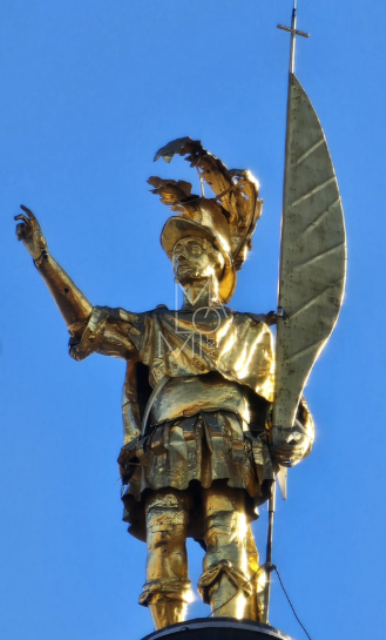
Miles Tebeus: History, hagiography, and the cult of Saint Alexander, patron saint of Bergamo
The cult of Saint Alexander of Bergamo represents one of the most significant historical and devotional nodes within the Lombard and medieval horizon of the Regio XI Transpadana. Suspensefully poised between the sparse documentary evidence of early Christian archaeology and late yet flourishing hagiographical redactions, his figure embodies the prototype of the miles tebeus—the soldier-martyr who dismantles the sacral apparatus of the Roman Empire in the name of the fides. The patron saint of Bergamo was martirized by decapitation on the twenty-sixth of August, 303 AD, under the reign of Emperor Maximian Herculius, leaving a spiritual and urban legacy that still shapes the identity of the Orobic city.
The historical-military context and the Theban Legion
The historical contextualization of Alexander is linked to the legendary Theban Legion, a Roman army unit entirely composed of Christians stationed in Egypt in the region of the Thebaid. Under the command of General Maurice, the legion was transferred to the West to stem barbarian incursions and participate in the anti-Christian purges decreed by Maximian. Alexander, who held the rank of centurion and vexillifer, found himself at the center of the dramatic mutiny at Agaunum, modern-day Saint-Maurice in the Canton of Valais. Faced with the imperial command to sacrifice to idols and decimate the converted local populations, the legionnaires refused, subsequently undergoing decimation and mass slaughter. Alexander was among the very few survivors capable of escaping the massacre and fleeing toward the Po Valley. A historical curiosity associated with this tragic deployment concerns the legion’s military equipment; subsequent literary sources insist that the soldiers carried not only standard weaponry but also spades and excavating tools, interpreted by medieval commentators as symbols of their dual nature as destroyers of heresies and builders of the new Church. A collateral legend relates that during their march across the Alps, the soldiers' armor shone with an unusual light, prompting the mountain populations to mistake them for guardian angels stationed to protect the passes—a visual detail that medieval hagiographers utilized to emphasize the moral purity of the troop.
Hagiographical sources and textual dialectics
From the perspective of philological criticism, the Passiones—the accounts of the martyrdom concerning Alexander—are considered late texts, whose earliest redactions date back to the tenth century. This chronological gap of nearly seven centuries is explained by the systematic destruction of ecclesiastical archives ordered by Diocletian during the Great Persecution. Subsequent biographies took shape from apocryphal memories and local oral traditions, enriching themselves with classical literary topoi of early medieval hagiography. Despite legendary interpolations, scientific foundations and archaeological discoveries confirm the historical existence of the martyr and the uninterrupted persistence of the cult in Bergamo since the sixth century, an era in which the Lombard King Authari consecrated a basilica in his name. A fascinating philological anecdote concerns the progressive transformation of Alexander's name in the oldest codices, where it sometimes appears altered into dialectal or syncopated forms, demonstrating how popular devotion rushed to assimilate the Egyptian saint, transforming him almost into a native citizen of the Orobic valleys before the official Church could codify his written memory. In the margins of an ancient missal, an amanuensis wrote that the saint's own voice seemed to echo in the local dialect during stormy nights, showing a total overlap between the sacred figure and the territory.
Anecdotes and miracles along the path of flight
Popular tradition and devotional texts record numerous prodigious events that marked Alexander's flight from Milan toward the territory of Bergamo. Captured a first time in Milan and imprisoned in the dungeons of Zebedia, Alexander escaped thanks to the complicity of Bishop Maternus and Fidelis of Como. During his flight along the road to Como, hagiography holds that he performed the resurrection of a deceased man, sparking astonishment among the crowds but also the immediate reaction of the Roman guards. A curiosity related to this roadside miracle narrates that the deceased was actually a pagan judge who had just expired, who, recalled to life by the saint, converted instantly and utilized his final hours of life to destroy the registers of sentences against local Christians. Brought once more before Maximian in Milan, Alexander performed an act of open insubordination by overturning the pagan sacrificial altar. Condemned to immediate decapitation, the miracle manifested on the scaffold, where the executioner's arms suddenly stiffened like stone, preventing him from lowering the sword. The physical impossibility of executing the sentence forced the magistrates to return him to his cell, from which he escaped a second time. Pursued by imperial soldiers, Alexander headed toward the borders of the Bergamasque territory and, reaching the banks of the river Adda near Fara, unable to cross by boat, the saint walked across the waters on dry feet, emulating the biblical crossing of the Red Sea. Local legend adds that the most relentless Roman pursuer, in an attempt to imitate him, drowned along with his steed, while the waters closed immediately after the martyr's transit, leaving a deep imprint on the stone bank that valley dwellers pointed to for centuries as the horseshoe of the divine knight.
The Orobic apostolate and the martyrdom in Colonna
Welcomed in Bergamo by Prince Crotacius, Alexander found refuge in the woods adjacent to the river Morla. Refusing isolation and the safety of concealment, he undertook an intense activity of evangelization that led to the conversion of the future city martyrs Fermus and Rusticus, relatives of Crotacius himself. His public preaching decreed his definitive arrest. On the twenty-sixth of August, 303 AD, the death sentence was carried out without further prodigious impediments on the parvis of a pagan temple, at the exact site where the Basilica of Sant'Alessandro in Colonna stands today in the lower part of the city. A curious detail handed down by late-medieval chronicles relates that the executioner designated for the final act was a soldier native to the Thebaid itself, who wept bitterly before unsheathing his blade, begging forgiveness from his former commander for the supreme act he was forced to perform by imperial order. A further rumor of the era assures that at the exact moment the axe severed the saint’s neck, the invisible bells of all the Roman towers in the city rang out festively on their own, engendering panic among the imperial garrison, who fled, abandoning the body on the pavement.
The miracles attributed to Saint Grata during the burial of Saint Alexander
The role of Saint Grata in the Alexandrian cycle does not end with the pious task of recovering the martyr's corpse, but assumes the characteristics of a true thaumaturgical epic, in which the holiness of the Bergamasque matron is reflected and amplified through contact with the remains of the miles tebeus. Local hagiographical tradition attributes a series of prodigies to Grata that not only confirmed her personal sanctity but also served to legitimize the establishment of the first Christian nucleus on the hill of the upper city, overcoming the final resistance of the local pagan authorities led by her own father, Prince Crotacius. A first and suggestive miraculous anecdote occurred at the exact moment Grata, assisted by several faithful servants, lifted Alexander's severed head from the ground of martyrdom. Devotional chronicles relate that the saint's head, instead of showing the signs of rigor mortis, prodigiously opened its eyes, gazing at the matron with a look of profound gratitude, while a warm gust of wind issued from his lips and enveloped those present, instantly healing two servants suffering from blindness and lower-limb paralysis. This event, which medieval historiography interprets as the symbolic passing of the spiritual mantle from the Egyptian soldier to the Orobic nobility, convinced Grata to openly defy the imperial decrees forbidding the burial of those condemned to capital punishment. Another episode cloaked in wonder occurred during the ascent along the steep paths leading to the matron's estates on the hill of the civitas. The weight of the martyr's body, initially insupportable for the small procession, suddenly became as light as a feather, allowing Grata herself to support the bier without any physical exertion. At the point where the company decided to rest briefly to regain their strength, near what would become the church of Sant'Alessandro della Croce, the body touched the ground and a spring of crystal-clear water gushed from a barren rock. This miraculous spring, which popular piety long considered endowed with therapeutic virtues for febrile illnesses, continued to flow for centuries, becoming a pilgrimage destination for valley peasants seeking the patron's protection over their crops. The most famous prodigy, and one heavy with political consequences for the Bergamasque community, was fulfilled upon the definitive deposition of the body into the sepulcher on the hill of San Vigilio. Faced with the opposition of Crotacius, who threatened to scatter the Christian’s ashes to prevent riots, Grata imposed her hands on the newly sealed tomb. Instantly, drops of a fragrant oil with pronounced thaumaturgical properties began to exude from the marble of the sepulcher, its fragrance spreading through the entire upper city, reaching even the palace of the pagan prince. Struck by this divine manifestation and cured of a painful eye infirmity through the application of that holy oil, Crotacius abandoned his old idols and accepted baptism along with his entire court. This miracle of the blossoming and anointing of the tomb not only sanctioned the birth of the first official Christian community of Bergamo but also transformed the burial site, where the cathedral stands today, into the pulsating and inviolable heart of both the spiritual and temporal sovereignty of the Orobic city.
The deposition, the miraculous blossoming, and the urban imprint
Immediately following the decapitation and the portents of Saint Grata, the final traditional anecdote concerning his figure occurred during the definitive transit toward the tomb. Wherever drops of blood fell on the city ground during the haste of the transport, legend has it that deeply fragrant white lilies germinated instantaneously, a prodigious event remembered today by the dedication of the Church of Sant'Alessandro della Croce. When the body was finally laid to rest on the hill where Grata erected the first sepulchral memory—the current Cathedral of Bergamo Alta—the surrounding ground covered itself with an out-of-season blossoming of red roses and aromatic herbs, a symbol of the community’s rebirth under the sign of the new faith. Old chroniclers noted that the scent of roses never left the crypt, re-emerging whenever the city found itself in grave danger, almost as an olfactory and acoustic signal of the martyr's vigilance. The devotional axis linking the Basilica in Colonna to the Cathedral traces the spine of Bergamo's urban development, transforming the memory of the Egyptian soldier into the foundational pivot of Orobic civilization.
The role of the Alexandrian cult in the conversion of the Lombards
The transition of the Lombard people from Arianism and ancestral paganism to Roman Catholicism found a fundamental vector of political and cultural mediation in the cult of Saint Alexander. This process, developing between the end of the sixth and the middle of the seventh century, was strongly guided by Queen Theodelinda and King Authari, and subsequently by Agilulfo. The Lombards were a highly militarized society, and the monarchy understood that the assimilation of Romanic populations could not bypass the sharing of sacred symbols. Rather than imposing foreign figures, Theodelinda promoted the adoption of saints who exalted warrior virtues, though reconverted into a Christian key. Alexander lent himself perfectly to this syncretism, since for the Lombards the bond of military loyalty was sacred, and the saint’s refusal to obey an unjust imperial order was reinterpreted not as anarchy, but as absolute loyalty to a supreme leader. In 589 AD, King Authari promoted the restoration of cult buildings linked to the Theban martyr in the Bergamasque area, forging an ironclad pact between the Lombard dukes of Bergamo, such as Duke Gaidulfo, and the local ecclesiastical structure. A lesser-known anecdote reports that Gaidulfo himself, initially rebellious to the crown and reluctant to convert, decided to submit to the king precisely after dreaming of Saint Alexander brandishing a banner of peace, interpreting the dream as a definitive divine warning. To celebrate the event, the duke ordered that his combat sword be melted down and transformed into a cross to be donated to the cathedral, indissolubly binding Lombard weapons to the Christian patron. This conversion of the nobility allowed for the isolation of pockets of Arian resistance, transforming the patron's cult into the identity adhesive of a new, mixed Roman-Lombard ruling class.
Hagiographical divergence between Bergamo and Brescia
The homonymous overlap between the patron saint of Bergamo and the namesake venerated in Brescia has frequently generated historiographical confusion, although the sources present marked differences. The Bergamasque Alexander boasts an Egyptian origin linked to the Theban Legion and his martyrdom is situated in 303 AD, whereas the Brescian Alexander was a native military man of the local garrison, martyred much earlier, around 119 AD, under the reign of Hadrian. From a narrative standpoint, the Brescian figure is intrinsically tied to the Passio of Saints Faustinus and Jovita, the primary patron saints of Brescia. According to tradition, Alexander was a pagan soldier tasked with guarding the two martyrs, but he was so struck by their firmness and by the miracle of the taming of the wild beasts in the circus that he publicly confessed his new faith, undergoing decapitation just outside the Brescian walls. An iconographic curiosity clearly distinguishes the two saints: while Alexander of Bergamo is almost always depicted as a proud knight playing the absolute protagonist with a military banner adorned with a lily, Alexander of Brescia often appears in a subordinate position, as an exceptional supporting figure holding the palm of martyrdom at the feet of Saints Faustinus and Jovita. An early medieval rumor even maintained that the Brescians, jealous of the imposing nature of the Bergamasque knight, had attempted to commission paintings in which their Alexander appeared astride a tamed lion—an attempt at iconographic outdoing that remained confined to border folk tales. Modern historiography hypothesizes that the sharp distinction between the two figures was amplified during the Carolingian and Ottonian eras to mark the ecclesiastical and political independence of the two rival dioceses, utilizing the respective holy bodies as symbolic borders of their spheres of influence.
The role of the diocese of Milan and the management of relics
The control and redistribution of the relics of martyrs constituted for the diocese of Milan, since the Ambrosian era, an instrument of geopolitical projection and hierarchical control over suffragan dioceses. Milan, as the metropolitan see, utilized the bodies of the two homonymous saints to weave a complex web of alliances. In the case of Alexander of Bergamo, Milanese interference is structural, given that the dungeons of Zebedia, located near the current Milanese church of Sant'Alessandro in Zebedia, represented the center of irradiation of the cult. The Milanese curia long claimed moral possession of the martyr, considering him a product of its own land loaned to the Orobic community. Throughout the early Middle Ages, control over the relics underwent constant tension, and Milan repeatedly attempted to exercise the right of preemption over the remains housed in Bergamo, forcing the Orobic bishops to lock away the saint's memory to prevent sacred thefts. A historiographical anecdote relates that during an inspection of the relics in the Middle Ages, Milanese envoys sought to steal an arm of the saint by hiding it in a barrel of wine destined for the archiepiscopal court, but the wine began to boil prodigiously during the journey, drawing the attention of the Bergamasque guardians who thwarted the sacrilege at the gates of the Orobic city. Regarding Alexander of Brescia, the Milanese curia instead performed a function of liturgical normalization, inserting controlled portions of Brescian relics into Milanese reliquaries to defuse the autonomist impulses of the Church of Brescia.
The impact of the Carolingian liturgical reform on the rewriting of texts
The Carolingian Renaissance imposed a profound restructuring of local hagiographical traditions through the program of cultic standardization sought by Charlemagne and codified by intellectuals like Alcuin of York. The political objective was twofold: to eliminate residual heresies and to uniform the liturgical texts of the Empire along the Rome-Aachen axis. Prior to the Carolingian era, the cult of the Orobic Alexander rested upon scattered hagiographical fragments, but Carolingian hagiographers subjected the Passio to stylistic correction, definitively codifying the saint's association with the Theban Legion. This insertion served to integrate Bergamo into a network of European Carolingian sanctuaries, eliminating narrative elements too close to popular fables and accentuating theological dialogues between the martyr and the emperor. A curiosity linked to this period concerns the zeal of the royal scribes, who decided to uniform even the physical description of the saint, attributing to him features and expressions that recalled the imperial portraiture of Charlemagne—a political propaganda operation aimed at making the ancient martyr perceived as an ideal ally of the new Christian sovereign. The rewriting of the Passio of the Brescian Alexander served instead to expunge the influences of the Gallican and Patriarchan liturgies, remodeling the saint to make him the embodiment of the perfect converted Roman citizen and focusing attention on martyrdom as the supreme act of submission to divine law, in perfect harmony with imperial ideology.
Material and archaeological evidence in the Bergamasque territory
The deep anchoring of the cult of Saint Alexander finds tangible correspondence in artifacts emerged from archaeological excavations and in early medieval numismatic production. A numismatic curiosity reveals that no Lombard coins minted in Bergamo bear the direct effigy of Saint Alexander, since Lombard coinage favored the figure of Saint Michael the Archangel, the national patron saint of the Lombards. However, the patron saint's imprint imposed itself immediately following the fall of the Germanic kingdom, because with the advent of the commune and the autonomy of the Bergamasque mint granted by Frederick Barbarossa in the twelfth century, Saint Alexander became the exclusive subject of the grosso and the denaro of Bergamo, where he appears in knightly attire on horseback with the city banner. A workshop tale relates that the Bergamasque coiners were so devoted to the saint that they traced a tiny secret cross under the hoof of the steed stamped on the silver, convinced that this sign would protect the coin from clipping and from the counterfeits of rival merchants. Archaeological investigations conducted beneath the floor of the Cathedral of Bergamo Alta have revealed the foundations of a monumental fifth-century early Christian basilica that contained the city's first monumental burial area. Archaeologists identified within the early Christian presbyterial area the remains of a sacred enclosure around which developed dozens of privileged tombs from the Lombard era, where members of the Germanic aristocracy chose to be buried with rich grave goods of fibulae and gold leaf crosses simply to rest in the shadow of the Egyptian protector.
The evolution of Visconteo and Venetian gride and the special courts of the Fair
The exceptional volume of goods and capital converging on the Meadow of Sant'Alessandro in the Lower City required, from the fourteenth century onward, an extremely rigid legal regulation, codified and communicated to the population through gride—the public proclamations cried out by heralds. The fair became a true temporary free zone in which common law was partially suspended to guarantee the physical safety of merchants and repress commercial fraud. Under the dominion of the Visconti of Milan, the gride reflected a highly militarized conception of the State, focusing on the protection of merchants even before they arrived in Bergamo, threatening the death penalty by hanging against valley bandits and issuing an absolute ban on carrying weapons within the market enclosure to prevent urban riots between Guelfs and Ghibellines. With the transition of Bergamo under the Republic of Venice in 1428, the management of the fair made an institutional leap in quality with the creation of the Court of the Deputies of the Fair, a special judicial body operating according to a summary and unappealable justice to resolve disputes within forty-eight hours. Venetian gride severely punished the use of altered scales with exposure to public pillory and instituted the Peace of the Fair, temporarily freezing private debts contracted outside the market to allow everyone to trade freely. A curious judicial anecdote reports the case of a Venetian spice merchant who, in the seventeenth century, attempted to sell adulterated pepper mixed with charcoal dust; the special court condemned him within three hours to eat a bowl of his own altered merchandise before being expelled forever from the city with his ears branded by fire. This complex system of gride and courts remained in force until the arrival of Napoleonic troops in 1797, leaving an indelible mark on Bergamasque civil culture and founding that ethics of contractual fairness that still characterizes the economic and exhibition fabric of the Orobic territory today.
Bibliographical references
- Ambrogio, Alberto. I Longobardi e la conversione al cattolicesimo: Archeologia e storia del culto alessandrino a Bergamo. Milan: Vita e Pensiero, 2012.
- Brogiolo, Gian Pietro, and Monica Ibsen. Archeologia di una cattedrale: Gli scavi sotto il Duomo di Bergamo. Mantua: S.A.P., 2014.
- Brogiolo, Gian Pietro. Brescia e Bergamo altomedievali: Chiese, fortezze e civitas. Mantua: S.A.P., 2005.
- Cattaneo, Enrico. Il culto dei saints nelle diocesi lombarde tra tarda antichità e alto medioevo. Milan: NED, 1993.
- Cortesi, Mariarosa. "I patti con il Santo: Scrittura e liturgia nei codici della Biblioteca Capitolare di Bergamo." Aevum 76, no. 2 (2002): 245–269.
- Deug-Su, I. L'opera agiografica di Alcuino e la riforma liturgica carolingia. Spoleto: Centro Italiano di Studi sull'Alto Medioevo, 1983.
- Eucherio di Lione. Passio Acaunensium Martyrum. Edited by Bruno Krusch. Monumenta Germaniae Honorifica, Scriptores Rerum Merovingicarum, t. III. Hannover: Hahn, 1896.
- Lupo Presbitero. Vita Sancti Alexandri Martyris. Critical text in Acta Sanctorum, Augustus, t. V. Antwerp: Socios Bolandianos, 1741.
- Piazza, Stefano. "Miracoli e propaganda: La figura di santa Grata nei passionali orobici." Quaderni di Storia Religiosa 12, no. 1 (2015): 89-114.
- Mazzotti, Mario. "La Legione Tebea in Padania: Flussi agiografici e varianti locali." Rivista di Storia della Chiesa in Italia 44, no. 2 (1990): 321–345.
- Pagnoni, Luigi Pagnoni. Le chiese parrocchiali della diocesi di Bergamo: Appunti di storia e di arte. Bergamo: Monumenta Bergomensia, 1992.
- Pani Ermini, Letizia, ed. Christiana Loca: Lo spazio cristiano nella città tardoantica e altomedievale. Rome: Palombi, 2000.
- Piccinni, Gabriella. Santi militari e identità cittadine nell'Italia dei Comuni. Florence: Olschki, 2018.
- Ravanelli, Renato. La Fiera di Sant'Alessandro: Mille anni di commercio e storia bergamasca. Bergamo: Grafica e Arte, 2008.
- Tagliabue, Mauro. La Chiesa di Bergamo dalle origini all'età carolingia: Fonti e problemi storiografici. Bergamo: Monumenta Bergomensia, 1999.